
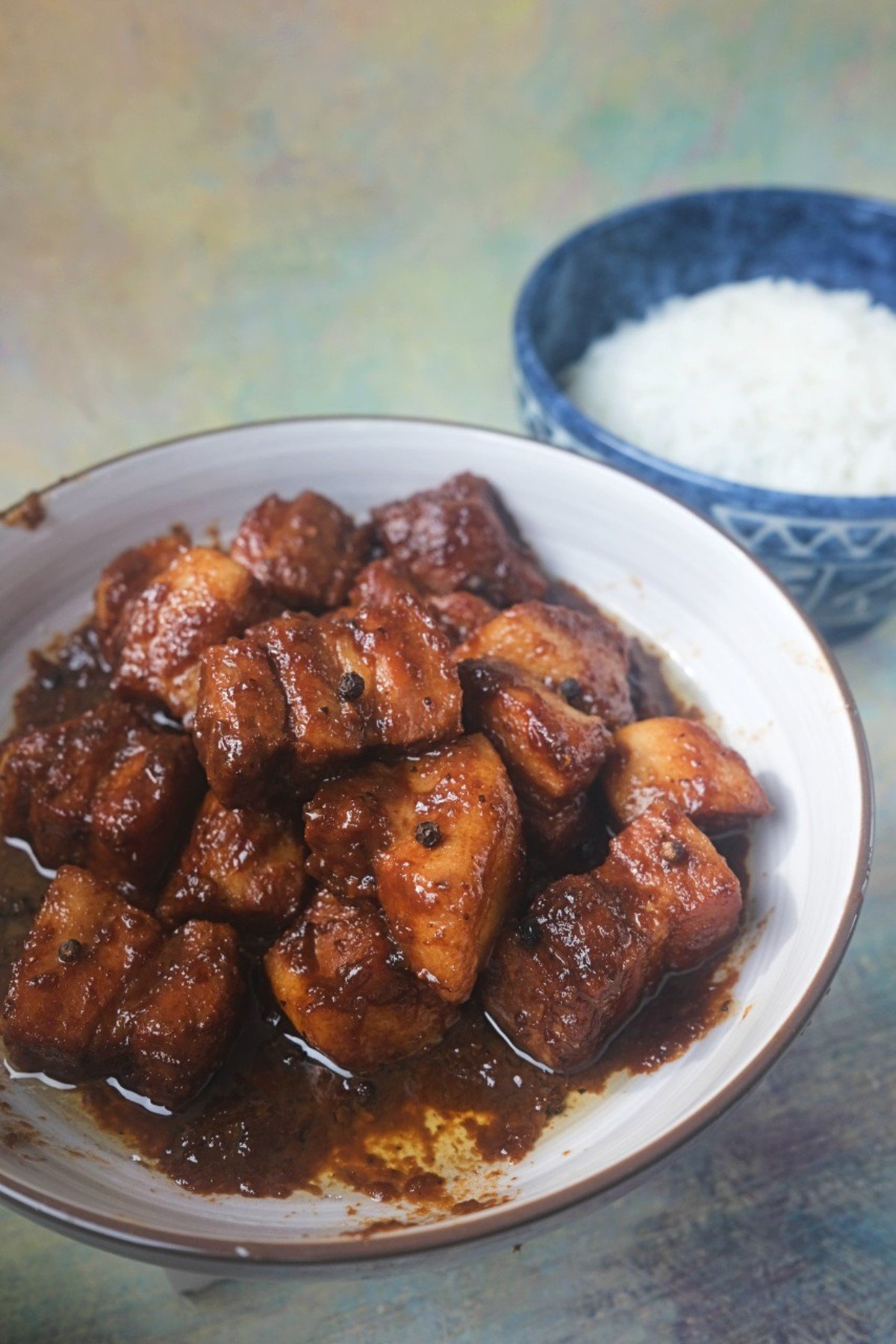
This easy Pork Adobo is rich and savory, a little sweet, and a whole lot garlicky. Sprite in adobo sounds strange, but don’t knock it till you try it.
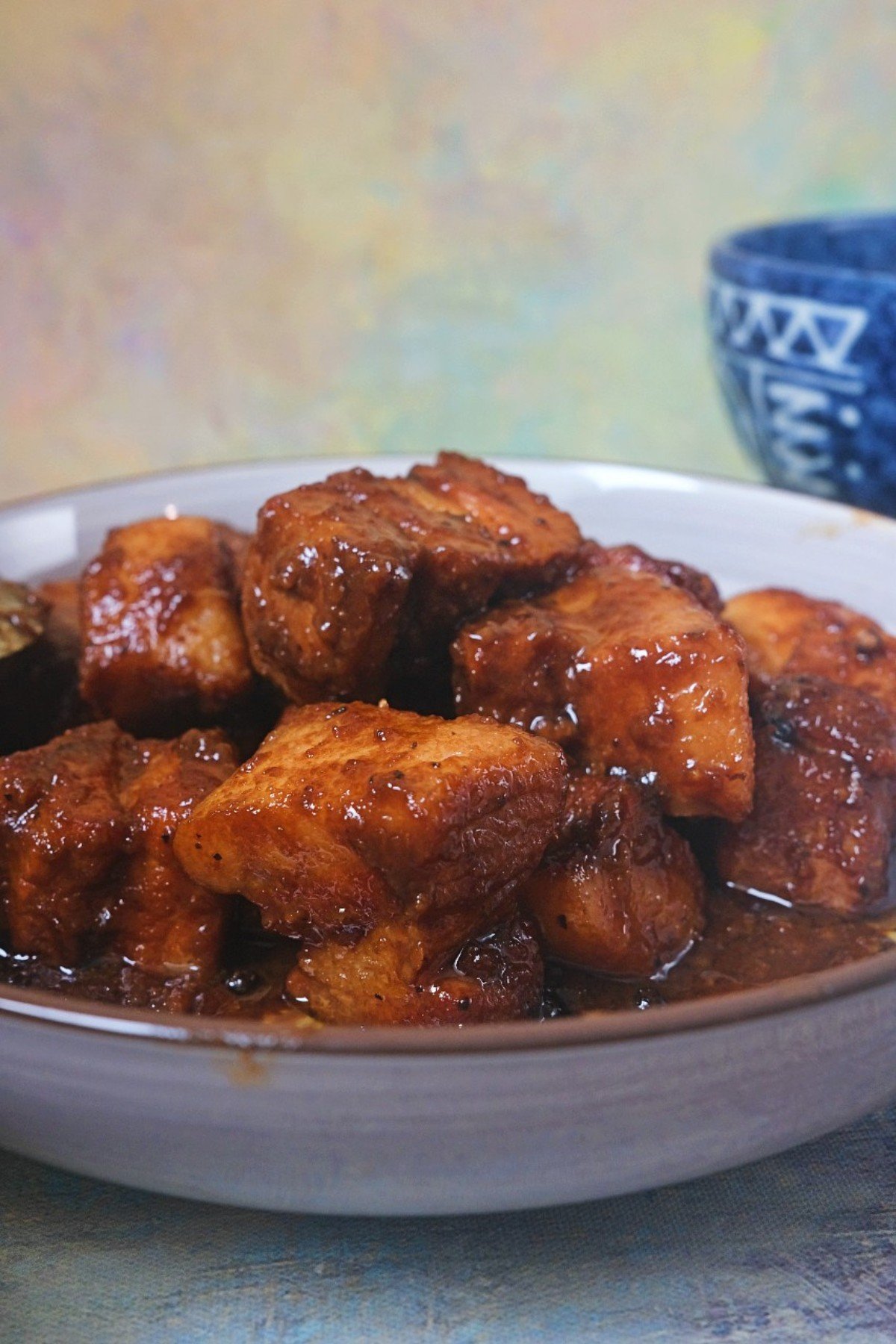
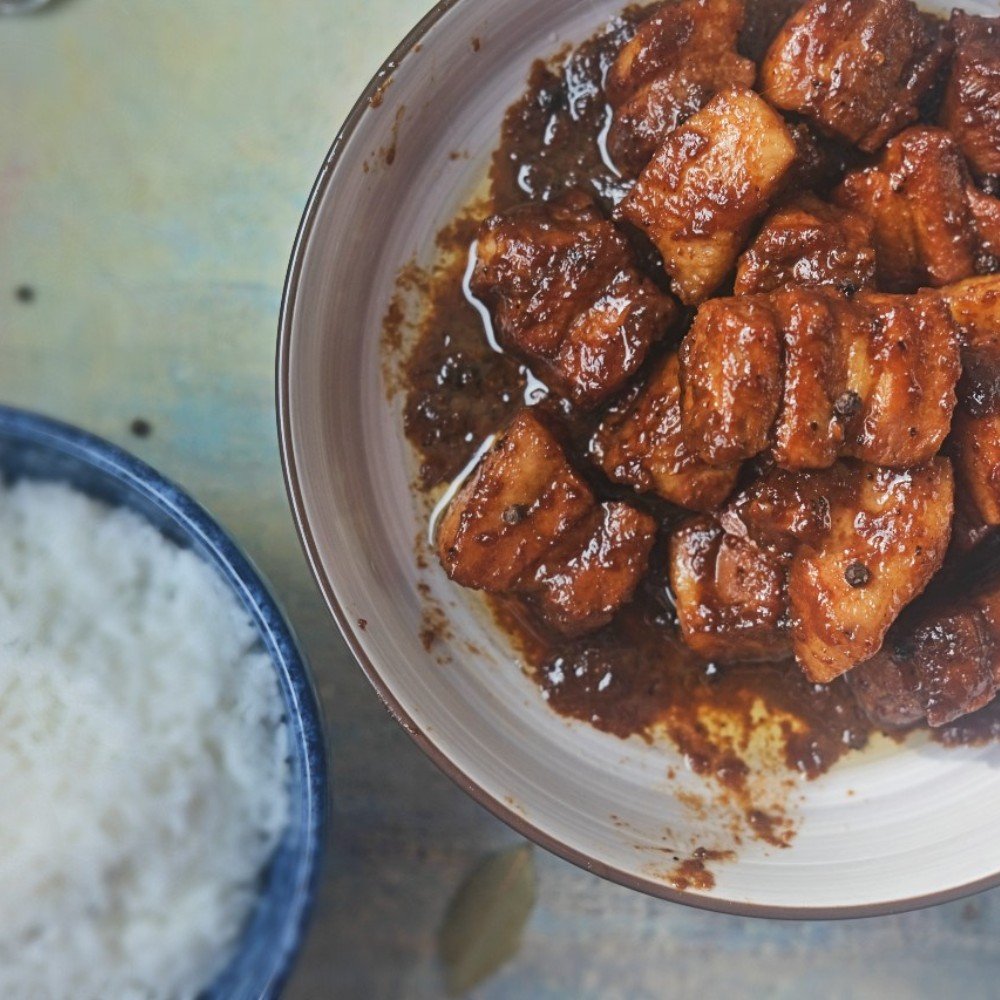
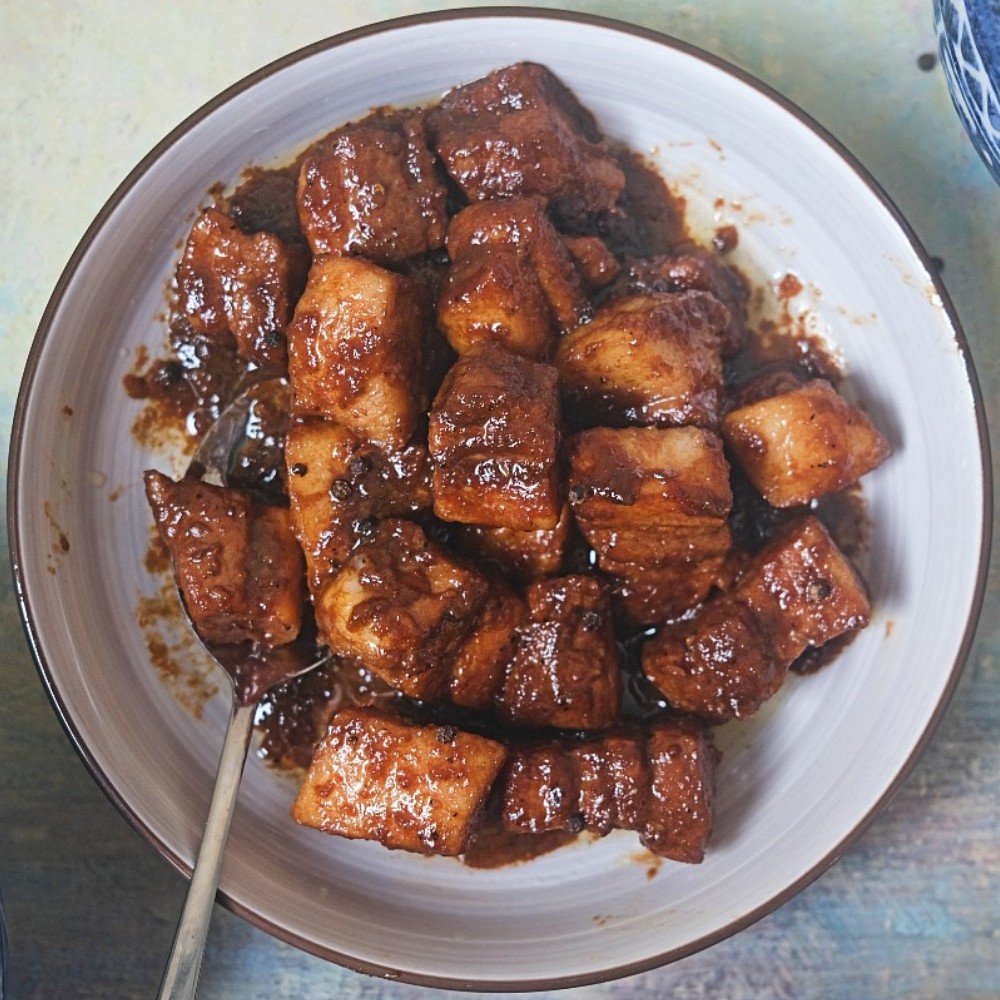
This dish is made with seared pork belly glistening in fat, simmered in a thick, savory sauce. Garlic, bay leaf, and peppercorns give it its signature aroma and flavor.
It’s the country’s national dish for good reason. It’s simple, but don’t be fooled, it’s quite addictive. Like, extra cup of rice addictive.
And, it’s incredibly easy. With a handful of pantry staples, you can make it anytime. Like, right now. Let’s go.
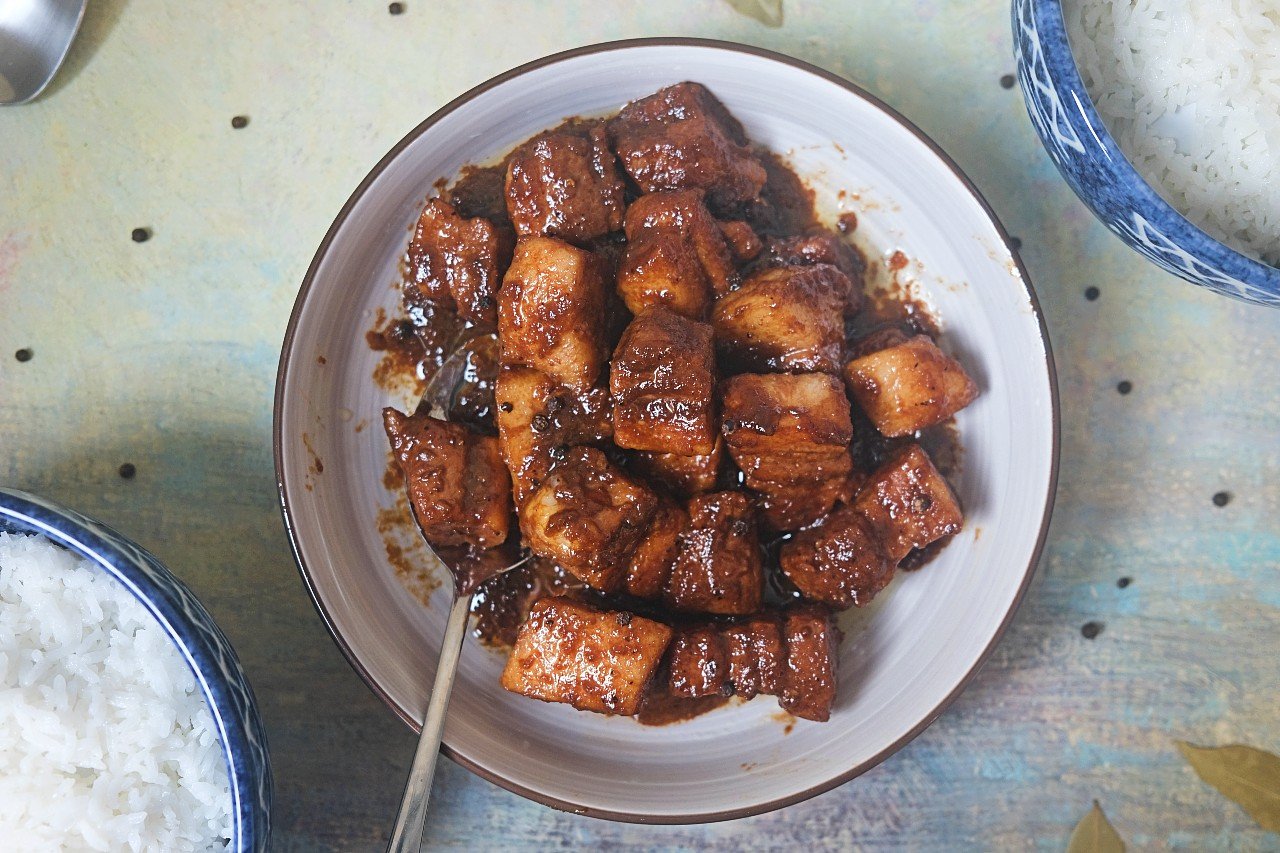
Easy Pork Adobo Recipe
There are many versions of adobo, but this one sits at the top of my list. I like my adobo with a hint of sweetness, which is where the Sprite comes in. As an added benefit, it also helps tenderize the meat as it simmers.
This recipe was inspired by a TikTok video I stumbled on during a doom scroll.
I love how it doesn’t require marinating the pork ahead of time. When I’m craving adobo, I want it now, not tomorrow!
I’ve tweaked the measurements to suit my taste, using more soy sauce and a slightly ridiculous amount of garlic. Feel free to make it your own, as well.
Just don’t forget to make extra rice. You’re going to need it.
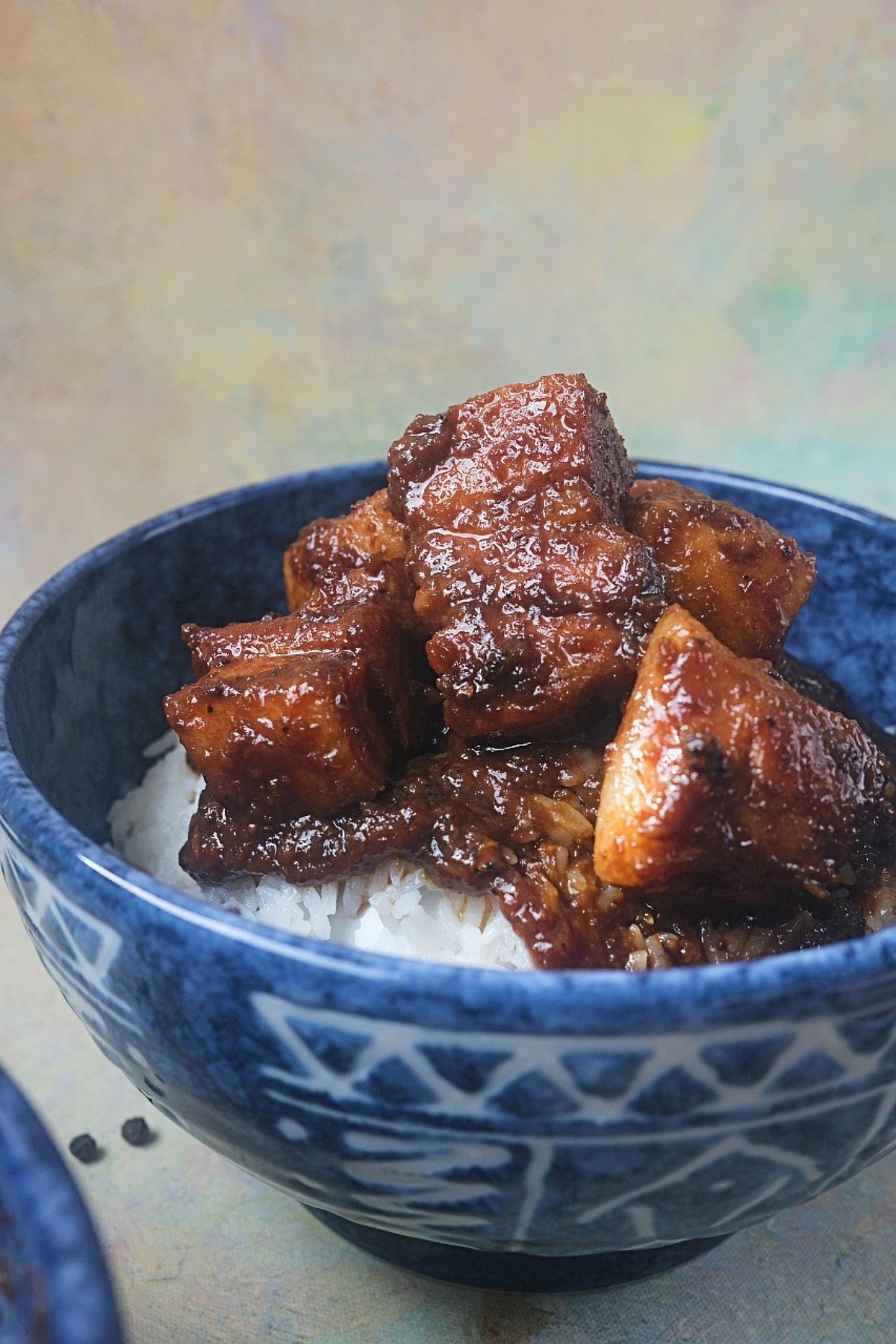
What is Filipino Adobo?
Filipino adobo is a dish of meat (usually pork and chicken) simmered in vinegar, soy sauce, garlic, bay leaves, and peppercorns until rich and flavorful.
Vinegar is used primarily to preserve the dish, while also tenderizing the meat and balancing its rich flavors.
Adobo dishes exist in Spain, Mexico, and across Latin America, but they’re very different from Filipino adobo. Filipino adobo is salty, tangy, and sometimes sweet, while Spanish and Mexican versions are spicier or more herb-forward.
Ingredients
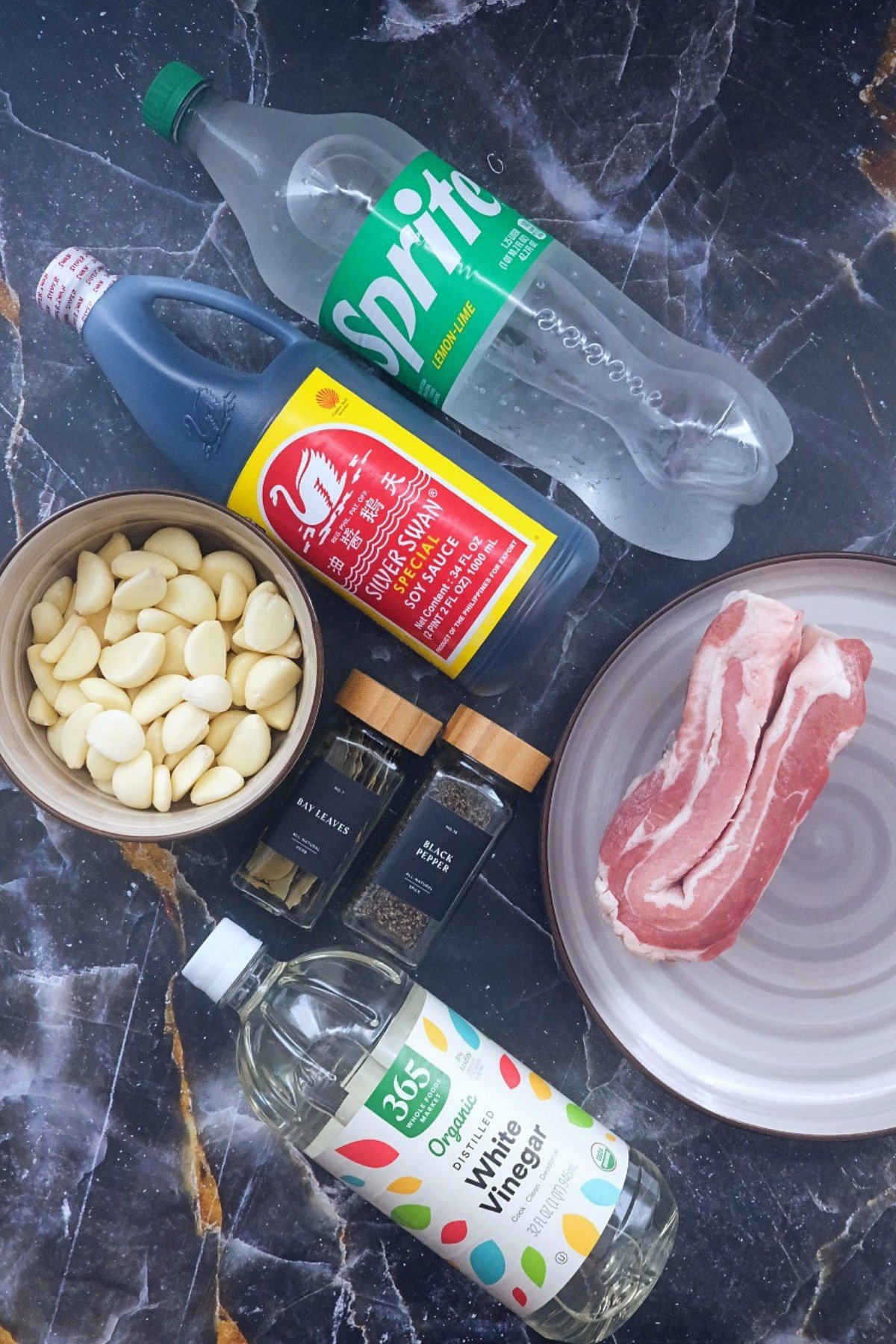
- Pork Belly: The best cut for adobo. It has the ideal meat-to-fat ratio, which makes the dish tender, juicy, and incredibly flavorful. Cut into cubes.
- Garlic: This is what gives the dish its deep, savory flavor. I use a lot of garlic, like five bulbs’ worth, because I’m a little extra. Feel free to scale it back.
- Dried Bay Leaves: Its warm, herbal, slightly peppery scent gives adobo its signature aroma.
- Vinegar: Gives adobo and ever-so-subtle tang. It also helps preserve the dish.
- Soy Sauce: Brings in the umami.
- Peppercorns: Traditional adobo uses cracked peppercorns for little pops of heat, but ground pepper works just fine too.
What’s the Sprite for?
Sprite adds a mild sweetness to the adobo, which helps balance the tang from the vinegar. The carbonation also helps tenderize the pork as it simmers.
How to Cook Filipino Pork Adobo
- Sear the pork until lightly browned. Remove from the pan and set aside.
- Sauté the garlic until lightly browned, about 4-5 minutes. Add the peppercorns and bay leaf, then cook for 1 to 2 more minutes.
- Simmer pork in Sprite. Return the pork to the pan and pour in the Sprite. Bring to a boil, then reduce the heat, cover, and simmer until the pork is tender, about 20-30 minutes.
- Add the vinegar and soy sauce. Cook for another 15 to 20 minutes, stirring occasionally, until the sauce reduces to your desired thickness.
- Serve over rice and enjoy!
Tips for the Perfect Pork Adobo
- Don’t crowd the pan: If you’re doubling the recipe (and you should), sear the pork in batches. Giving the pieces space helps them brown properly instead of steaming.
- You can swap the simmering liquid. Sprite adds sweetness and helps tenderize the pork, but you can use other liquids too, like pineapple juice, chicken broth, or plain water.
- The longer the simmer, the thicker the sauce. I like my sauce super thick and flavorful so I usually let it reduce for about 20 minutes. But you can stop earlier if you prefer your sauce a little thinner.
- Serve it the next day: Adobo always tastes better the next day, when the flavors have had time to fully soak into the meat.
Can I use other meats?
Absolutely. Here are some alternatives:
- Pork Shoulder (Pork Butt): A tougher cut with plenty of fat and connective tissue, making it ideal for slow cooking.
- Chicken: You can use one cut, like thighs, or a mix of parts depending on what you prefer.
Filipino Pork Adobo Versions
- Adobo in Coconut Milk: Coconut milk is added to the sauce, creating a creamy, slightly sweet version of adobo.
- Adobong Puti: Made without soy sauce, this version relies on vinegar, garlic, salt, and pepper, resulting in a lighter-colored adobo with a sharper, cleaner flavor.
- Adobong with Turmeric: Adding turmeric gives the dish its signature yellow color and a warm, earthy taste.
- Adobo with mashed liver: Mashed pork liver is stirred into the sauce, giving it a thicker texture and deeper, more intense flavor.
What to Serve with Pork Adobo
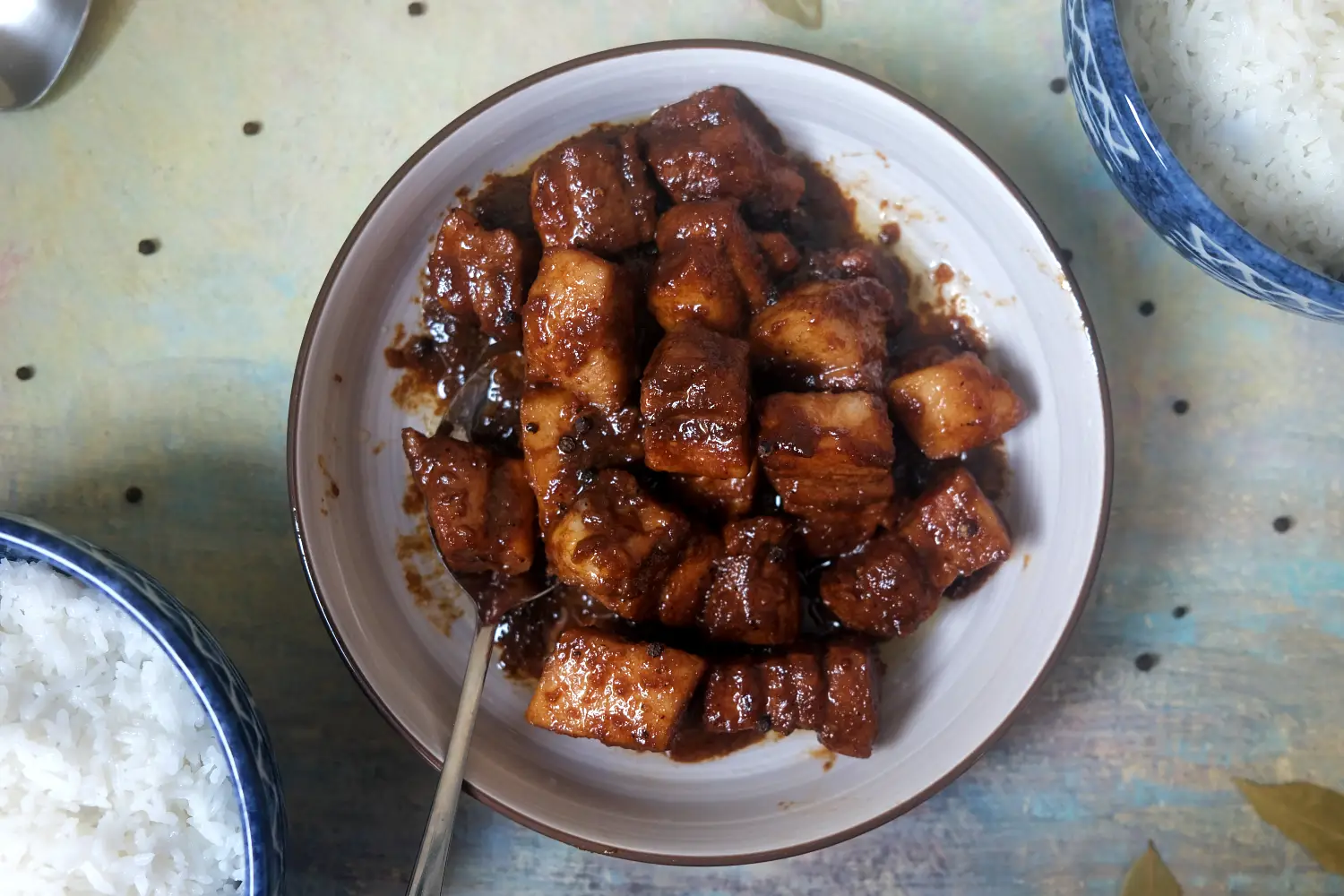
There’s really only one classic way to eat pork adobo, and that’s with a mountain of white rice.
But when it comes to leftovers, Filipinos (myself included) also love using pork adobo as a sandwich filling. Just shred the meat, mix it with mayo, and slap it between slices of bread. Yum.
How to Store Leftovers
Thanks to the vinegar, adobo keeps really well and is perfect for making ahead.
To Store: Let the adobo cool completely, then transfer it to an airtight container. Refrigerate for up to 5 to 7 days.
To Reheat: Microwave individual portions or reheat the entire dish on the stovetop until warmed through. If the sauce has thickened, loosen it with a splash of water.
Try These Easy Filipino Recipes Next
Easy Pork Adobo Recipe (with Sprite)
Ingredients
- 4-5 bulbs of garlic minced
- 1 ½ pounds pork belly cut into 2-inch cubes
- Oil for frying
- 1 teaspoon cracked peppercorns
- 2 pieces bay leaf
- 2 cups Sprite
- ⅓ cup white vinegar
- ⅓ cup soy sauce
Instructions
- Mince the garlic and cut the pork belly into 2-inch cubes.
- Heat oil in a large pan. Sear the pork belly until lightly browned. Remove from the pan and set aside.
- Sauté the minced garlic until lightly browned, about 4-5 minutes. Add the peppercorns and bay leaf, then cook for 1 to 2 more minutes.
- Return the pork to the pan and pour in the Sprite. Bring to a boil, then reduce the heat, cover, and simmer until the pork is tender, about 20-30 minutes.
- Add the vinegar and soy sauce. Cook for another 15 to 20 minutes, stirring occasionally, until the sauce reduces to your desired thickness.
- Serve over rice and enjoy!




3 Responses
So good! I loved the slight sweetness from the Sprite.
My family loved this! The pork was so tender and the sauce was delicious. Thx for the reicpe
One of the best adobos I’ve had. Nice!