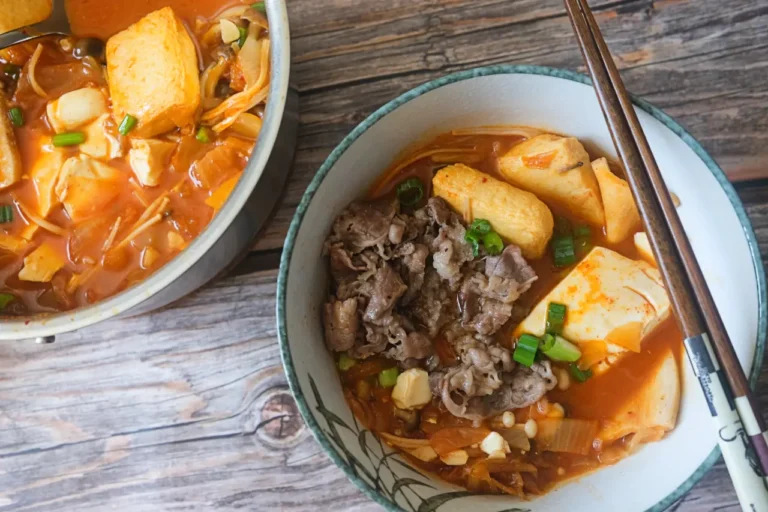
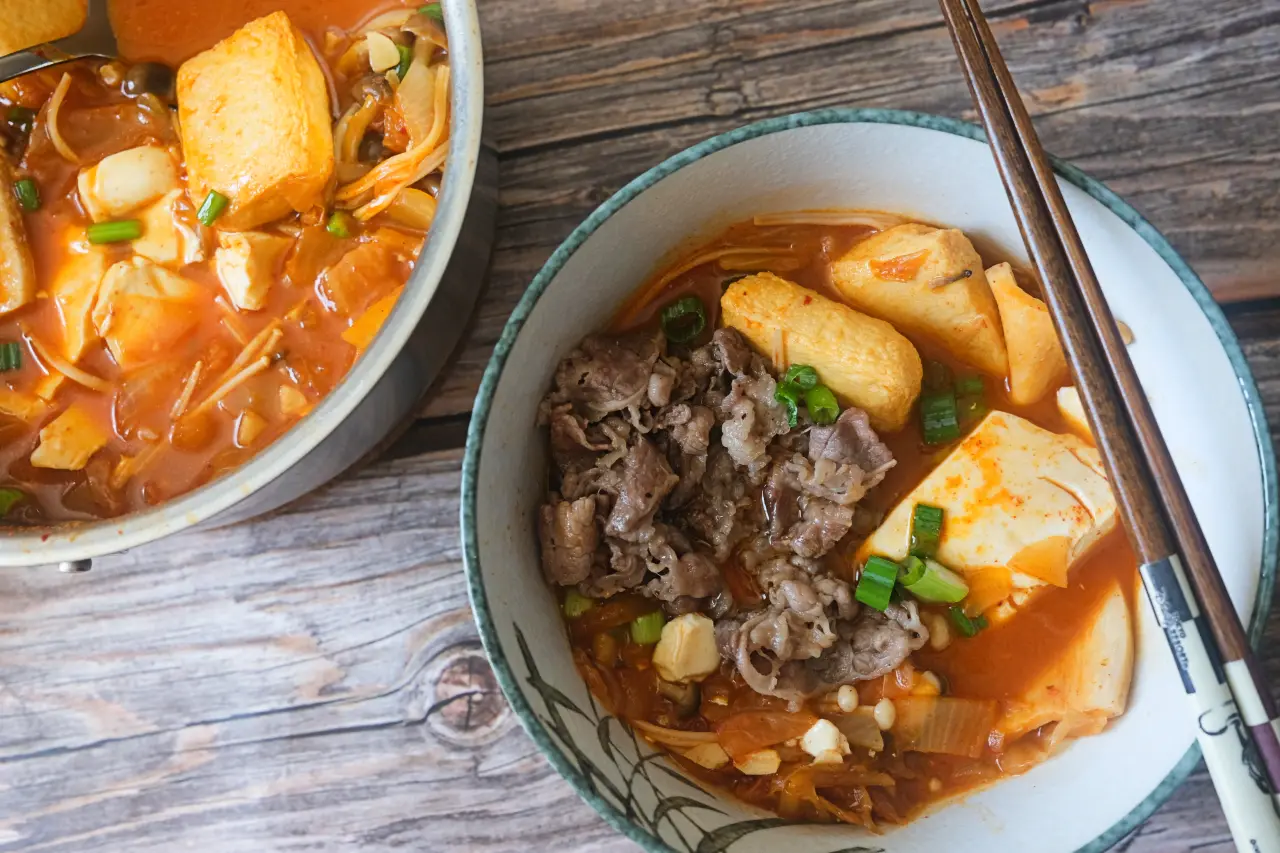
Make this easy Kimchi Jjigae for a warm, spicy dinner! Loaded with beef, tofu, and mushrooms in a fiery kimchi broth, this Korean stew is hearty, flavorful, and perfect for chilly fall and winter nights.
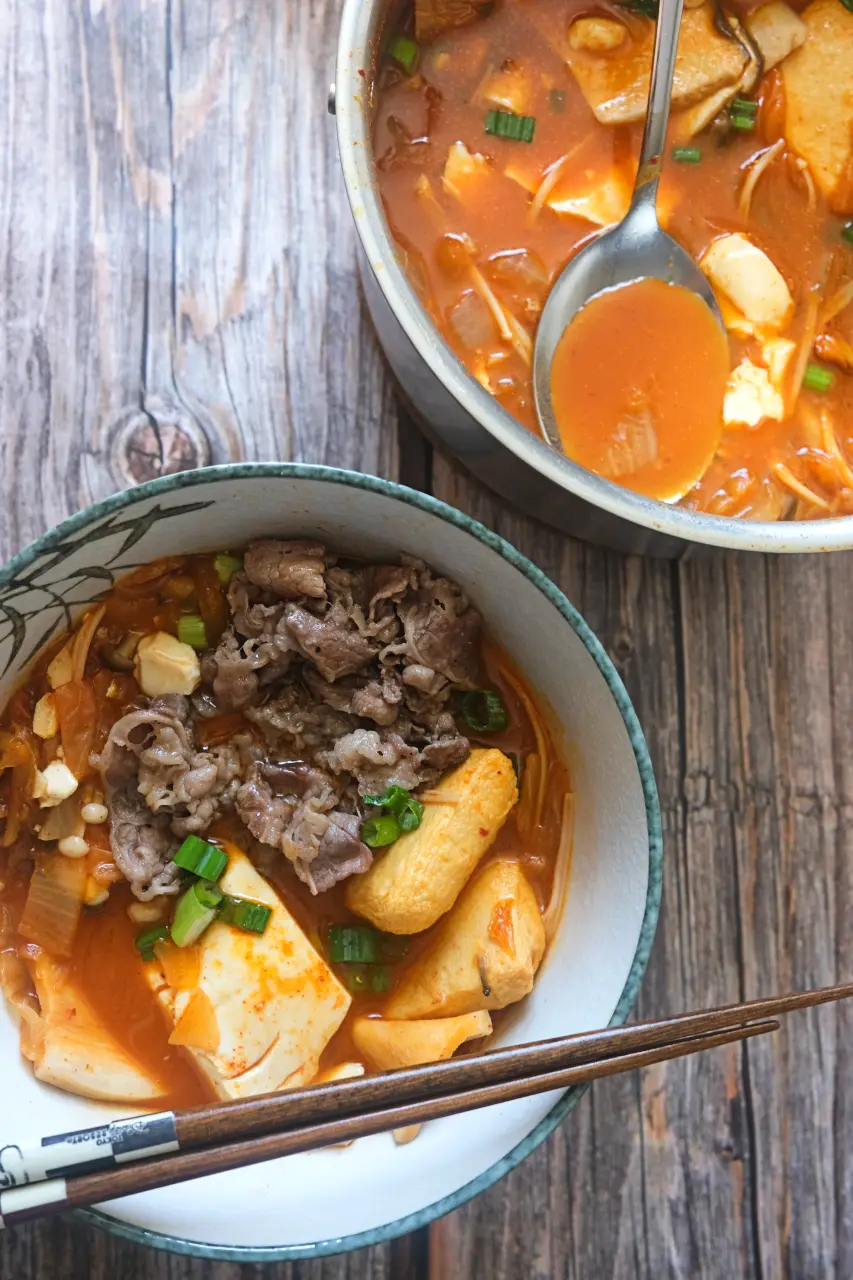
It’s starting to get chilly here in LA, and I couldn’t think of a better way to warm up than with this Korean stew. If you love K-dramas like me, you know the experience of watching your favorite characters slurp kimchi jjigae and immediately craving a bowl!
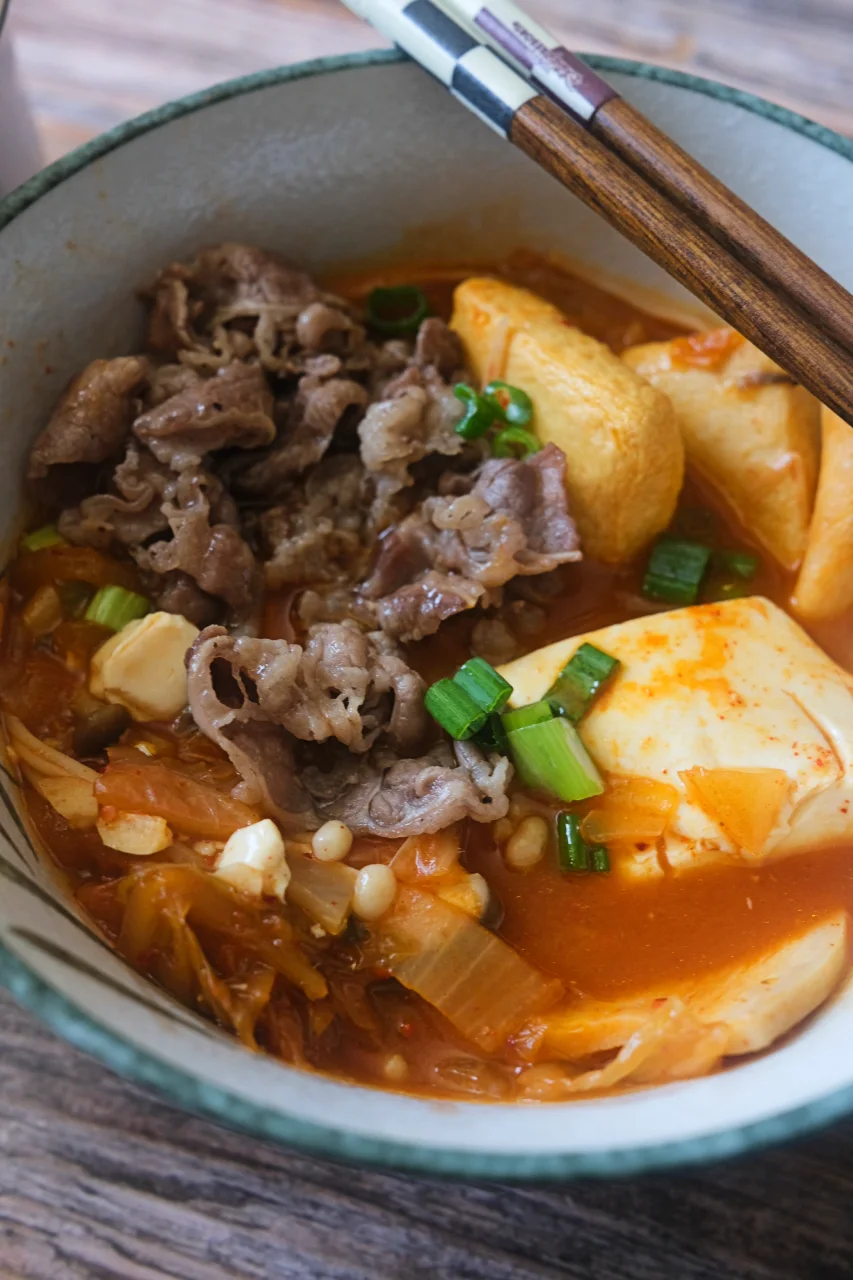
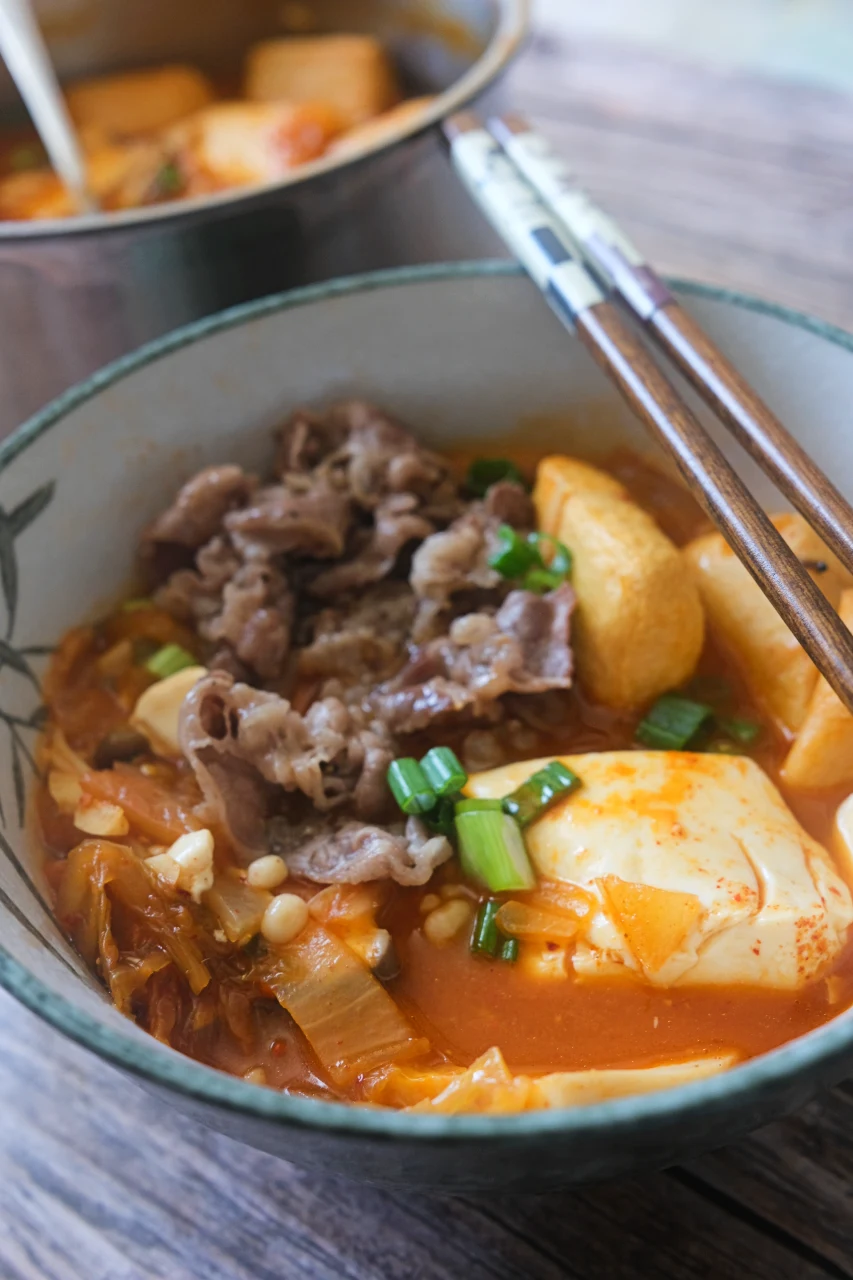
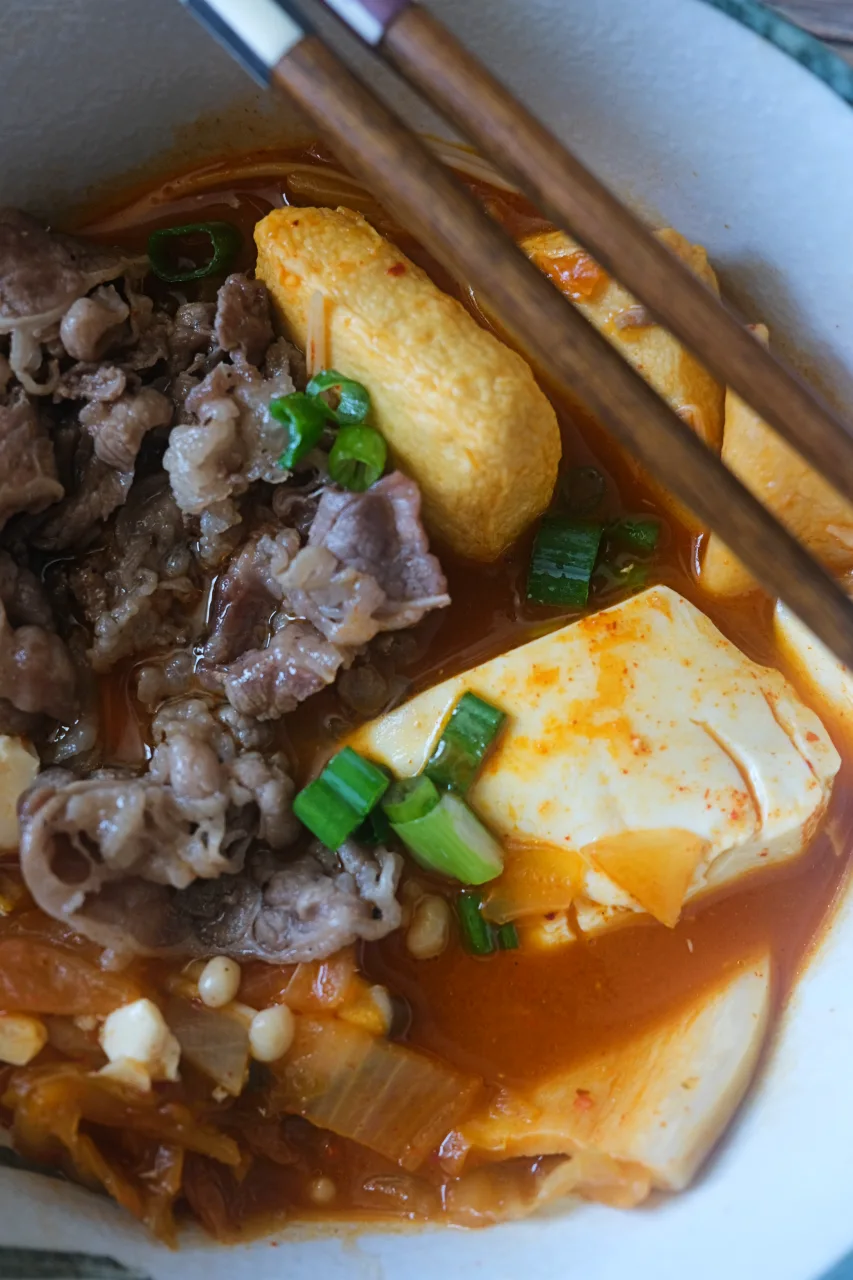
The stew is packed with tender beef, soft tofu, and earthy mushrooms, simmered in a tangy, spicy, savory kimchi gochujang broth.
It’s surprisingly easy to make and ready in about 20 minutes. Plus, you can add whatever you like to the pot, from dumplings to rice cakes, hot pot balls, eggs, and more veggies. You name it.
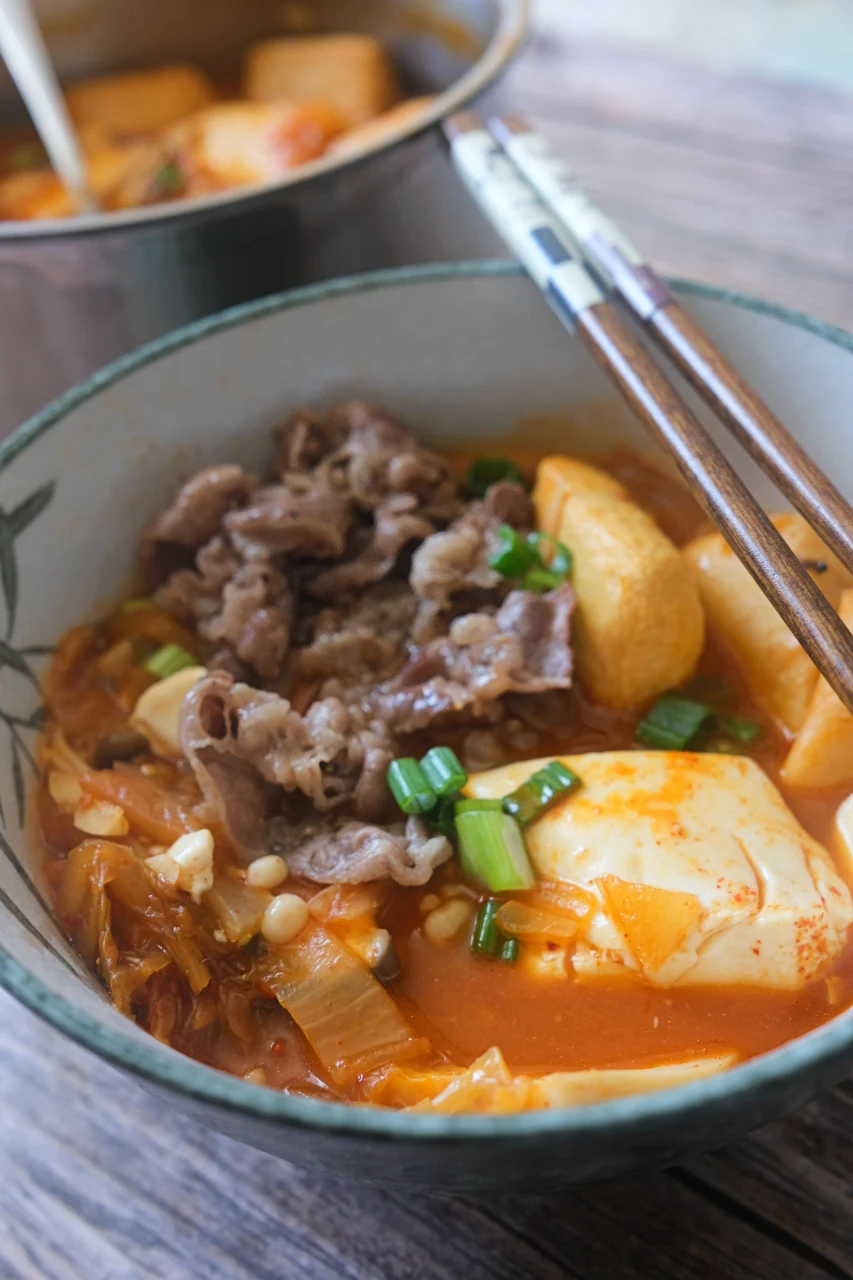
What Is Kimchi Jjigae?
Kimchi jjigae is a popular Korean stew made with kimchi, a savory broth, and ingredients like tofu, meat, mushrooms, and vegetables. Jjigae means “stew” in Korean. The kimchi is the star of the dish, giving the broth its spicy, tangy, and savory flavor.
How Spicy Is Kimchi Jjigae?
Kimchi jjigae is moderately spicy, but the heat level depends on the kimchi and how much gochujang or gochugaru you add.
For a milder stew, start with less gochujang and skip the gochugaru. If you like it hotter, add extra gochujang, a spoonful of gochugaru, or some sliced fresh chilies.
Kimchi Jjigae vs. Kimchi Soup
Kimchi jjigae is technically a stew, not a soup. Jjigae means stew in Korean, and it’s thicker, richer, and more concentrated than Korean soups.
Kimchi soup tends to have more broth and a lighter flavor. Kimchi jjigae uses less liquid, so you get a stronger kimchi flavor in every bite.
That said, the terms are sometimes used interchangeably, especially outside Korea.
Ingredients for Kimchi Jjigae
- Sesame oil. Adds a subtle nutty flavor to the stew.
- Onion and garlic. The aromatic base of the stew.
- Beef. I used thinly sliced beef, but you can use any protein you like, such as pork belly, chicken, ground pork, shrimp, or even canned tuna.
- Kimchi. Use well-fermented kimchi if you can. The stronger, tangier flavor works especially well in the broth.
- Gochujang. Adds heat, color, and a slightly sweet, savory flavor. Use more or less depending on how spicy you like it.
- Dashi. My personal touch for adding even more umami to the stew. But you can also use anchovy stock or broth instead.
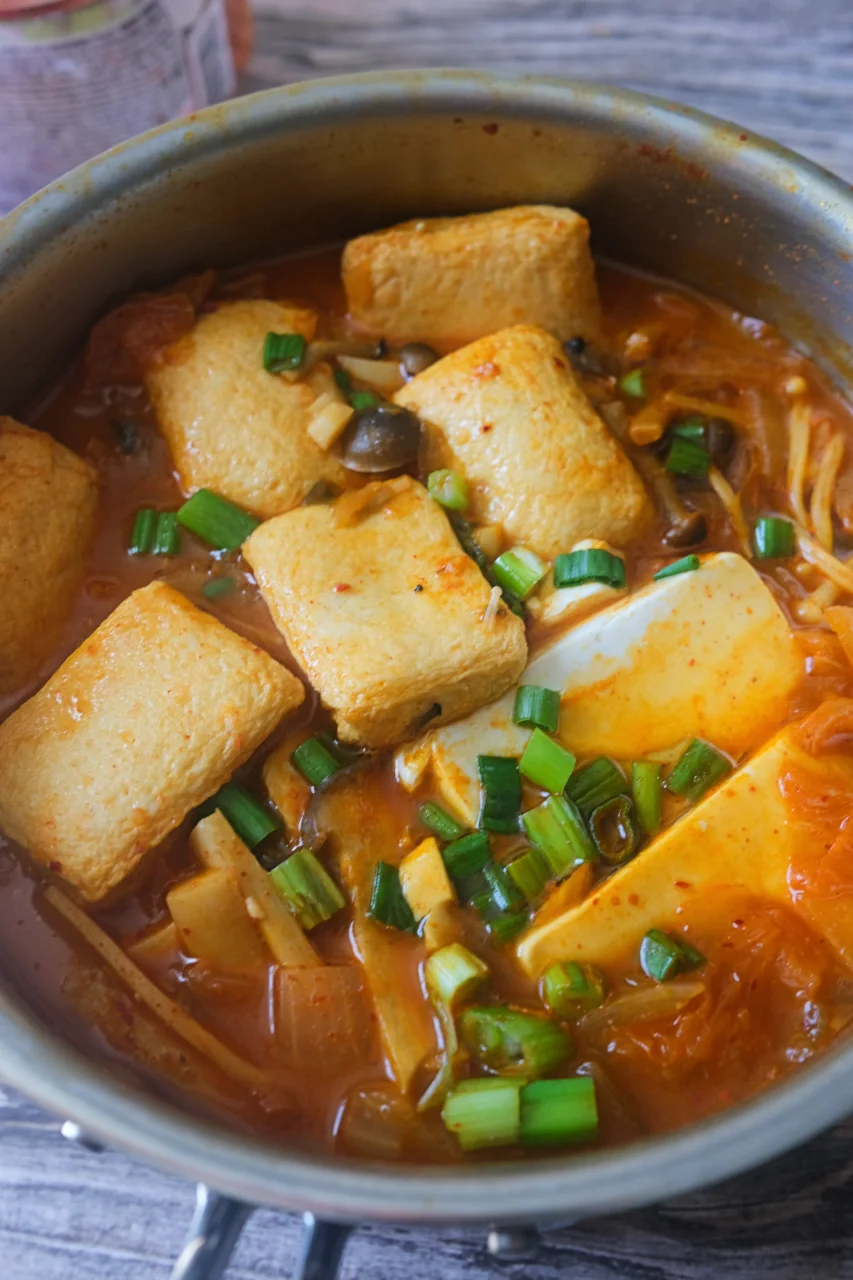
- Mushrooms. Add an earthy flavor and extra texture. Try shiitake, oyster, button, enoki, or a mix of your favorites.
- Tofu. Use your favorite! I went with soft tofu, but firmer varieties are great, too.
How to Make Kimchi Jjigae
Kimchi jjigae is super easy to make in one pot. Here’s how:
1. Sauté the onion and garlic in sesame oil in a pot over medium heat.Saute onion and garlic.
2. Add the beef and season with salt and pepper. Cook until browned.
3. Add the kimchi and cook for 3-5 minutes to soften it and bring out more of its flavor.
4. Stir in the gochujang, add water and dashi powder, then mix well. Bring everything to a boil, reduce the heat, and simmer for 10 minutes.
5. Add the tofu and mushrooms. Simmer for another 5 minutes, or until the mushrooms are tender and the tofu is heated through.
6. Serve. Taste and adjust the seasoning if needed. Serve with rice and enjoy!
Kimchi Jjigae Variations
There are infinite ways to bulk up kimchi jjigae. Try some of these easy additions.
- Dumplings. Toss in a few frozen dumplings and let them simmer right in the broth.
- Hot pot balls. Toss in your favorite shabu-shabu balls, like fish balls, shrimp balls, squid balls, or beef balls. Let them simmer in the broth until heated through. .
- Different proteins. Swap the beef for pork belly, ground pork, chicken, or shrimp.
- More vegetables. Try napa cabbage, bok choy, or extra mushrooms.
- Noodles. Add ramen, udon, or glass noodles to make it even more filling.
- Egg. Crack an egg into the simmering stew and cook until the white is set.
- Cheese. Add a slice of cheese on top for a creamy, slightly richer broth.
- Rice cakes. Korean tteok add a soft, chewy texture and make the stew heartier.
- Gochugaru. Add a spoonful of Korean red pepper flakes for extra heat and a deeper red color.
What to Serve with Kimchi Jjigae
Kimchi jjigae is hearty and flavorful; a few simple sides are all you need to round out the meal.
- Steamed rice. The mild rice balances the spicy, savory broth and soaks it right up.
- Fried egg. Add one over your rice for an easy way to bulk up the meal.
- Korean rolled omelet. Gyeran mari is mild and fluffy, so it pairs nicely with the bold stew.
- Korean side dishes. Serve it with simple banchan like seasoned spinach, bean sprouts, or pickled radish.
More Easy Korean Recipes to Try
Mayak Eggs (Soy-Marinated Eggs)
Easy Kimchi Jjigae (Korean Kimchi Stew)
Ingredients
- 1 tablespoon sesame oil
- ¼ medium onion sliced
- 3 cloves garlic minced
- 8 oz thinly sliced beef
- ¼ teaspoon salt
- ¼ teaspoon black pepper
- 1 ½ cups about 240 g kimchi, chopped
- 1 to 1 ½ tablespoons gochujang
- 2 ½ cups water
- 2 teaspoons dashi powder
- 6-8 oz mushrooms sliced
- ½ block firm tofu sliced
Instructions
- Heat sesame oil in a pot over medium heat. Add the onion and sauté for 2-3 minutes. Add the garlic and saute for another 30 seconds.
- Add the beef and season with salt and black pepper. Cook for 2-3 minutes, stirring occasionally, until browned.
- Stir in the chopped kimchi and cook for 3-5 minutes.
- Add the gochujang and stir until combined. Pour in the water and add the dashi powder. Stir well and bring to a boil. Reduce the heat and simmer uncovered for 10 minutes.
- Gently add the tofu and mushrooms. Simmer for another 5 minutes, or until the mushrooms are tender and the tofu is heated through.
- Taste and adjust the seasoning as needed. Serve with rice and enjoy!