
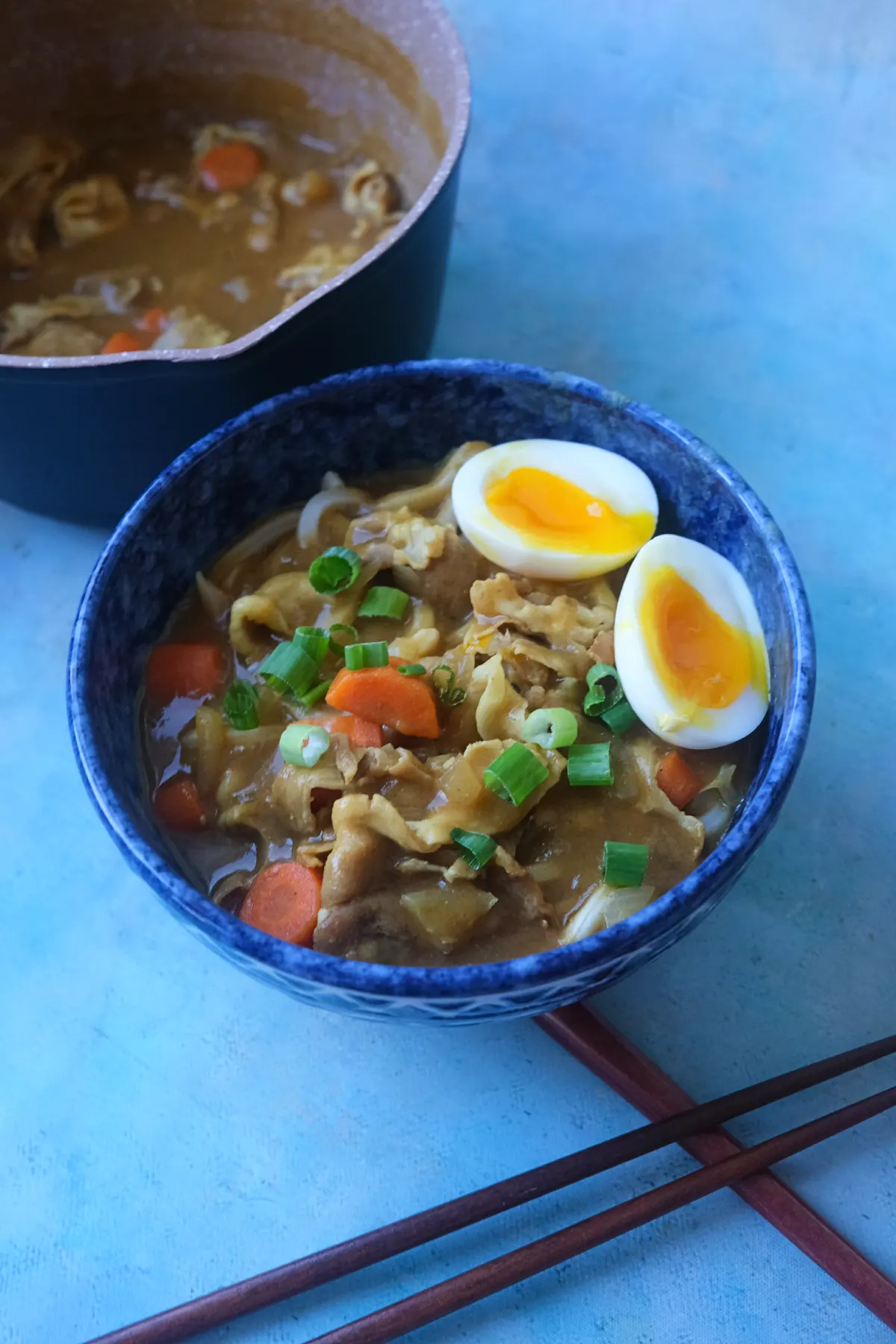
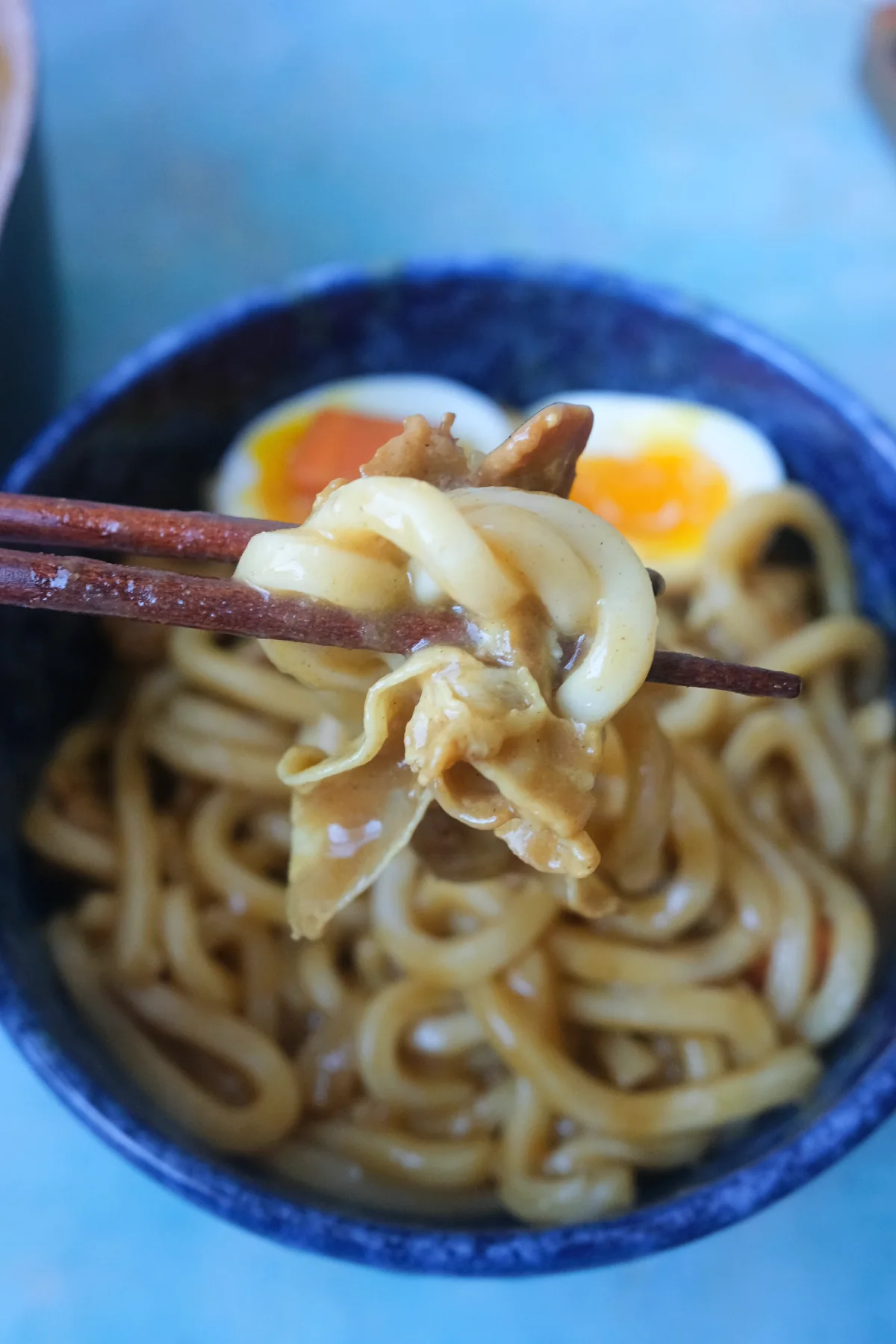
Japanese Curry Udon is loaded with thick, chewy udon noodles and tender pork in a rich, velvety curry broth. It’s easy, comforting, and ready in 30 minutes.
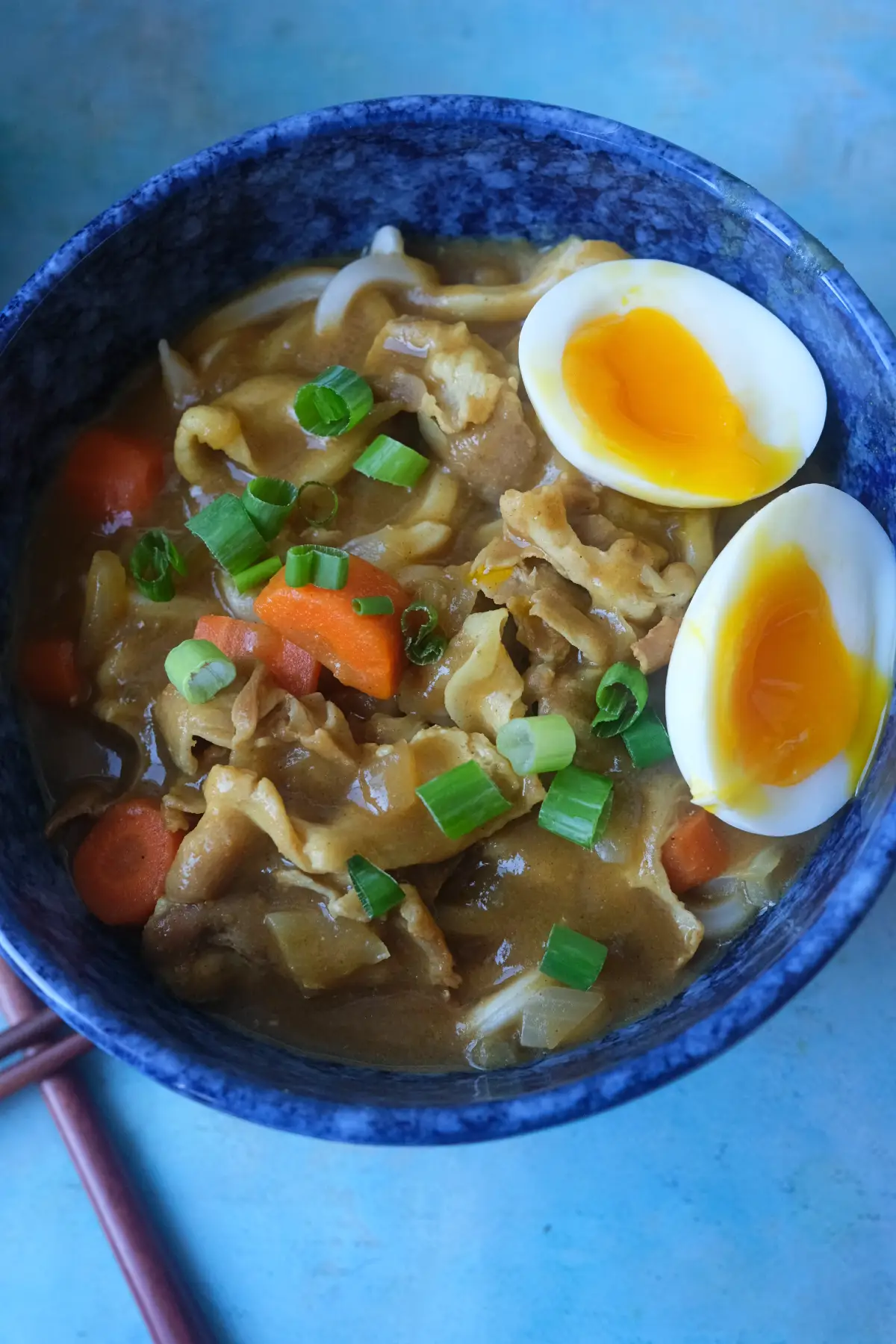
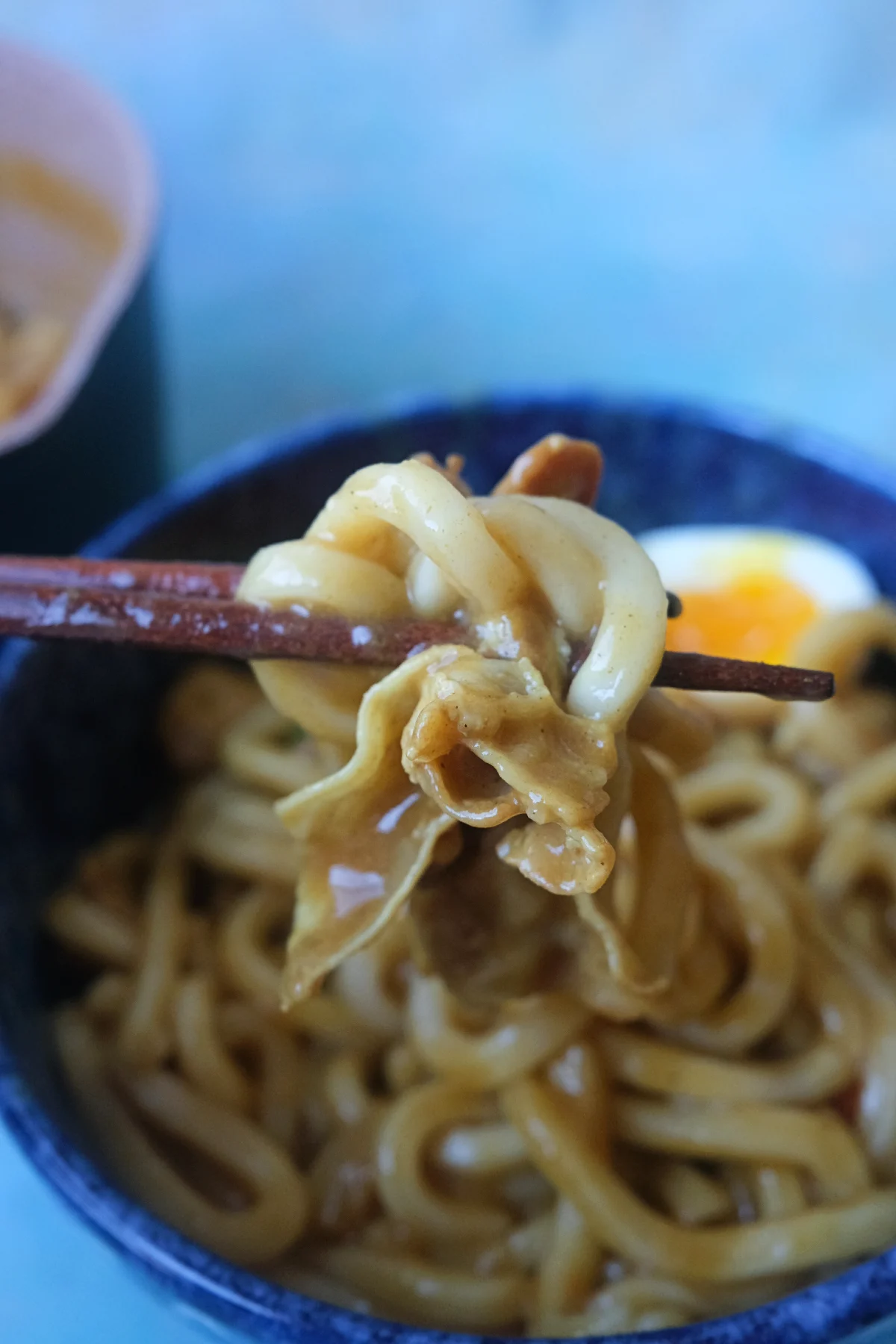
If you’re craving something warm and satisfying, this curry udon hits the spot. The rich curry broth clings to every noodle and you’ll want to slurp up every last drop. Then you’ve got tender pork belly that practically melts in your mouth and adds even more richness to the broth.
The best part is it’s shockingly easy to make. With a handful of simple ingredients and about 30 minutes, you’ll have a restaurant-worthy bowl of Japanese Curry Udon on the table.
Ingredients You’ll Need
- Protein. I used thinly sliced pork, but you can swap it for chicken, beef, shrimp, or even tofu. Just cook your protein until browned before adding the broth.
- Onion. As it simmers, the onion softens and adds a natural sweetness to the broth.
- Carrot. Carrots add a touch of sweetness and texture that pairs well with the savory curry broth.
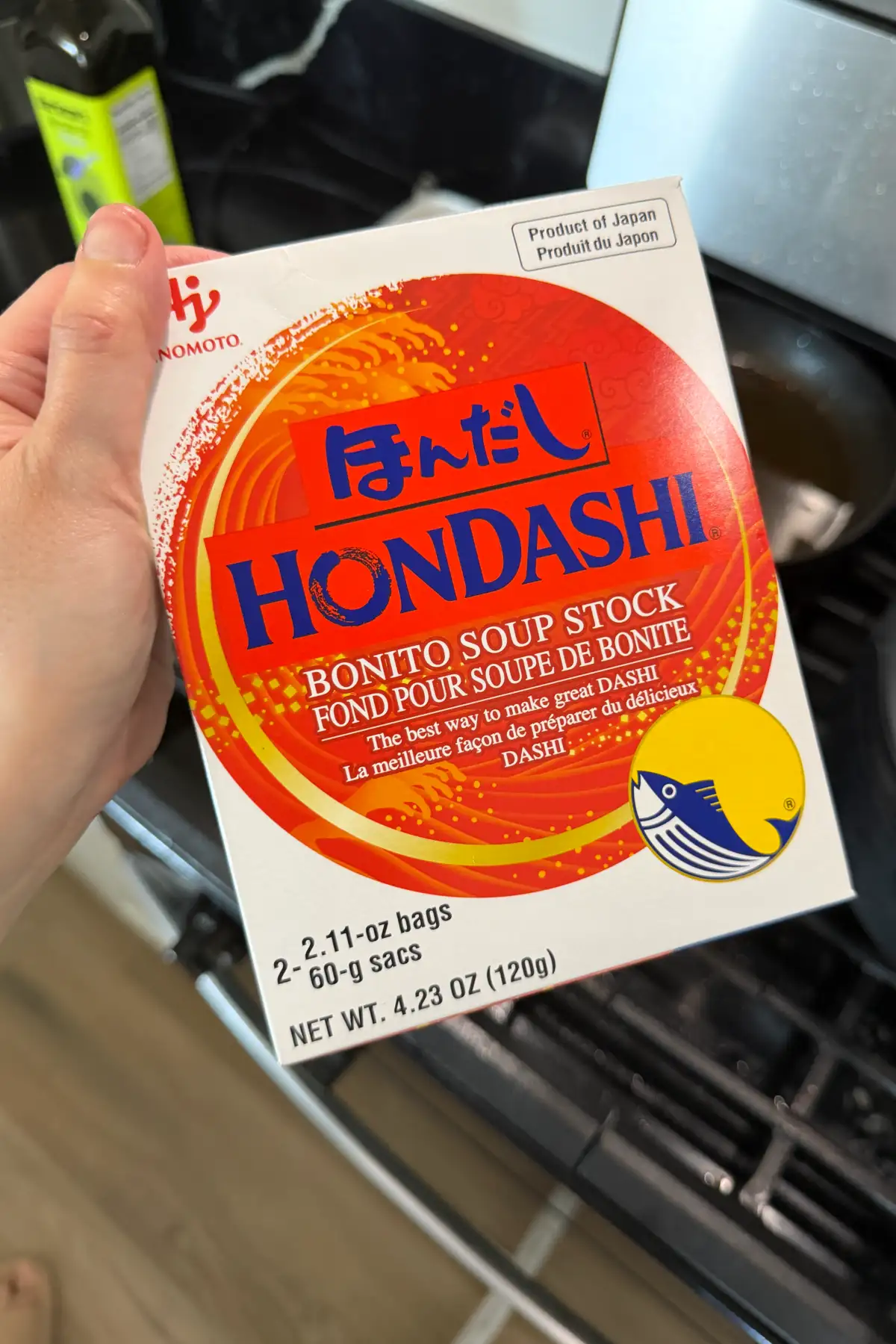
- Dashi broth. Dashi is a Japanese soup stock that gives the broth its signature umami flavor. I used dashi granules mixed with water, but you can also use homemade or store-bought liquid dashi. You’ll find dashi granules in the Asian aisle of many grocery stores.
- Soy sauce. A splash of soy sauce deepens the flavor and seasons the broth.
- Mirin. Mirin is a sweet Japanese cooking wine that balances the savory flavors. It’s available at most grocery stores and Asian markets.
- Japanese curry cubes. These are the key ingredient that transforms the broth into a rich, flavorful Japanese curry. They come in mild, medium, and hot varieties – use whichever you prefer.
- Brown sugar. I like adding a teaspoon or two to round out the flavors, but it’s completely optional since some curry cubes are already on the sweeter side.
- Udon. Frozen udon has the thick, chewy texture perfect for curry udon. If you can’t find frozen, vacuum-packed or dried udon also works.
- Green onions and Soft-boiled eggs. For toppings
How to Make Japanese Curry Udon
1. Brown the pork.

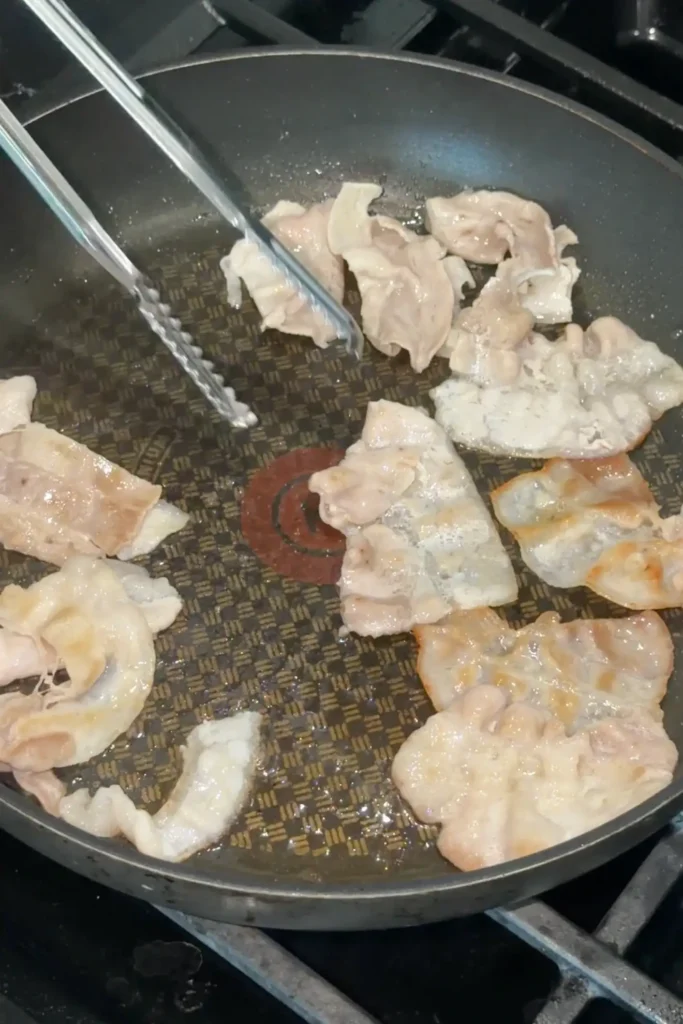
Heat the oil in a large pot over medium-high heat. Add the pork and cook until lightly browned, about 3 to 4 minutes.
2. Cook the vegetables.
Add the onion and carrot. Cook for 4 to 5 minutes, stirring occasionally, until the onion begins to soften.
3. Simmer the broth.

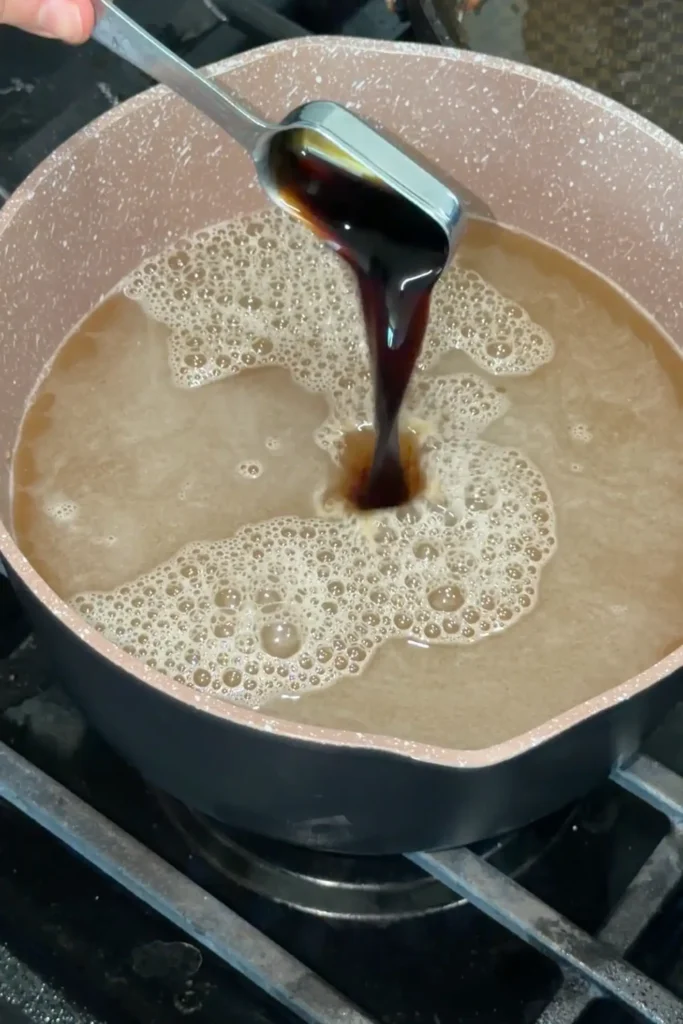
Pour in the dashi broth, soy sauce, and mirin. Bring to a boil, then reduce the heat and simmer for 10 minutes, or until the carrot is tender.
4. Stir in the curry cubes.
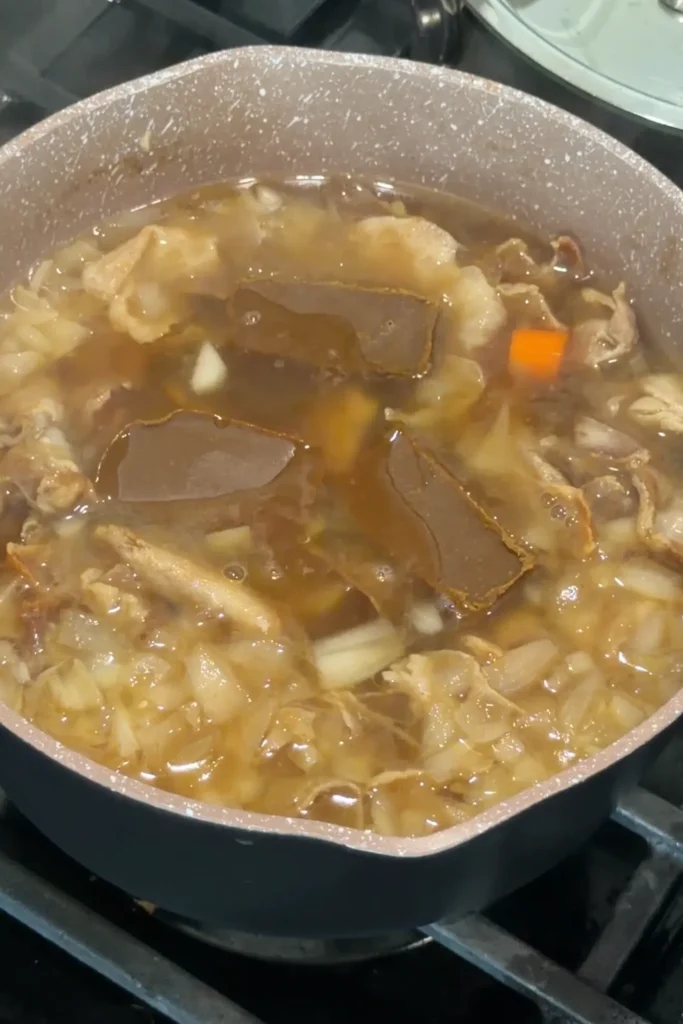

Turn off the heat and add the curry cubes. Stir until completely dissolved. Stir in the brown sugar, if using, then return the pot to low heat and simmer for 5 minutes, stirring occasionally, until the broth thickens slightly.
5. Cook the udon.
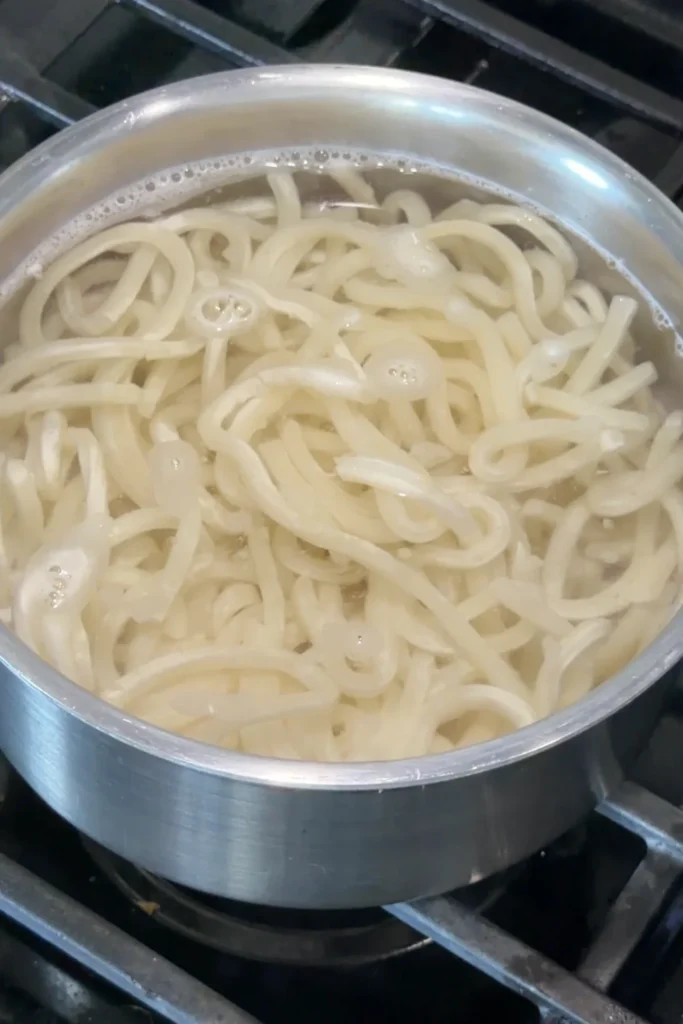
Meanwhile, cook the udon noodles according to the package directions. Drain well.
6. Assemble and serve.
Divide the udon between serving bowls. Ladle the pork curry over the noodles, then garnish with sliced green onions and a soft-boiled egg. Serve and enjoy!

Recipe Tips and Variations
- Adjust the curry. Use 3 curry cubes for a lighter broth or 4 cubes for a richer, thicker curry.
- Switch up the protein. Chicken, beef, shrimp, or tofu all work well in place of pork.
- Add more vegetables. Mushrooms, spinach, bok choy, or potatoes make great additions.
- Thin the broth if needed. If the curry thickens too much, stir in a splash of dashi or water before serving.
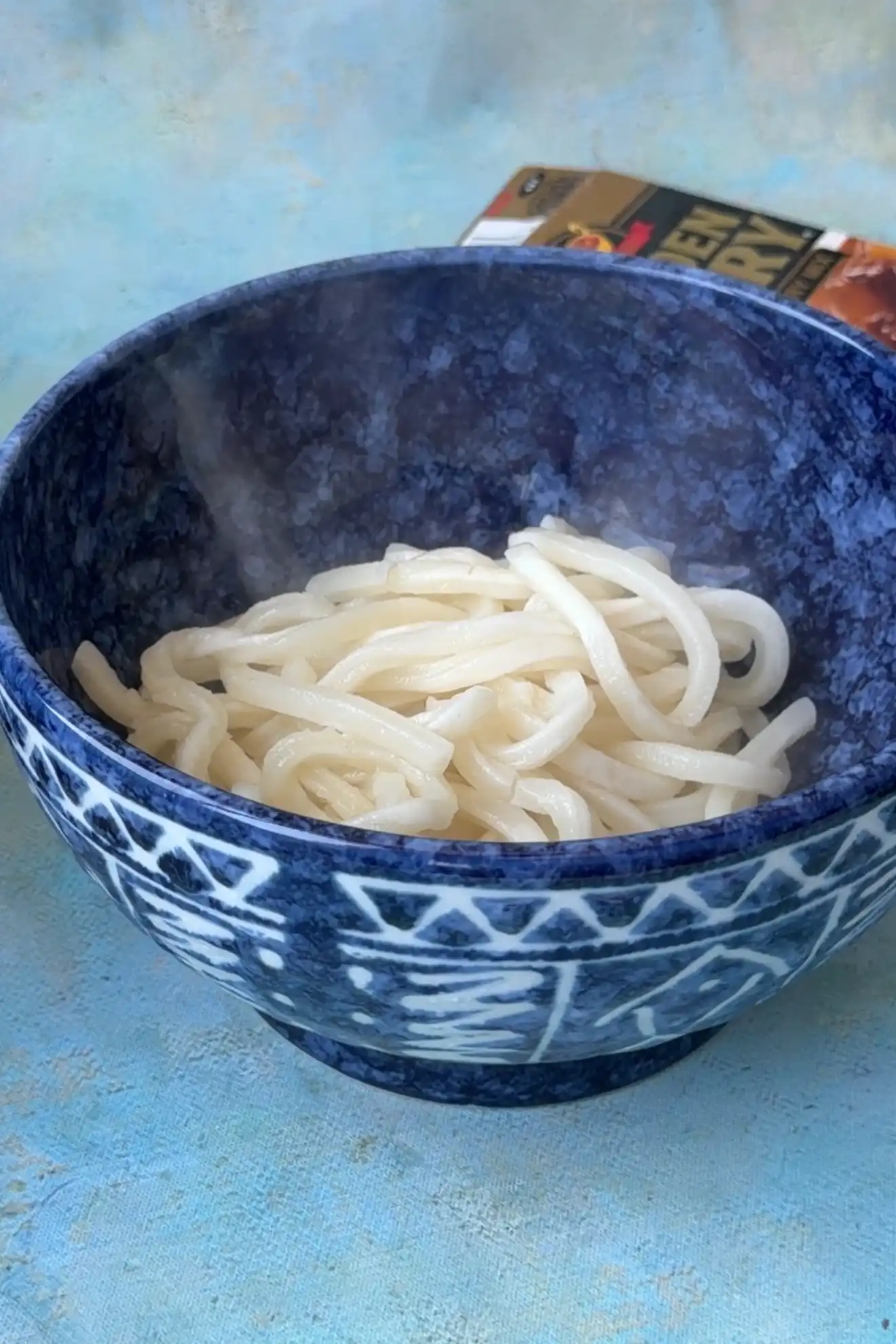
Best Noodles for Japanese Curry Udon
Frozen udon noodles are the best choice for Japanese curry udon. They’re thick, chewy, and hold up really well in the rich curry broth.
If you can’t find frozen udon, vacuum-packed noodles are a great alternative. They have a softer texture but still taste great. Dried udon works too. Just cook it according to the package directions before adding it to the curry broth.
How to Store and Reheat
To Store: Store the curry broth in an airtight container in the refrigerator for up to 3 days. Cook only as many udon noodles as you plan to eat, then prepare fresh noodles when serving the leftovers.
To Reheat: Warm the curry broth in a saucepan over medium heat until hot. Add a splash of dashi or water to loosen it if needed. Heat the udon separately according to the package directions, then combine and serve.
More Recipes You’ll Love

Japanese Curry Udon
Ingredients
- 1 tablespoon neutral oil
- 1 pound thinly sliced pork pork belly, pork shoulder, or pork loin
- 1 small onion sliced
- 1 medium carrot sliced
- 4 cups dashi broth
- 1 tablespoon soy sauce
- 1 tablespoon mirin
- 3 to 4 Japanese curry cubes
- 1 to 2 teaspoons brown sugar optional
- 4 packs frozen udon noodles
- Sliced green onions for garnish
- Soft-boiled eggs for topping
Instructions
- Heat the oil in a large pot over medium-high heat. Add the pork and cook until lightly browned, about 3 to 4 minutes.
- Add the onion and carrot. Cook for 4 to 5 minutes, stirring occasionally, until the onion begins to soften.
- Pour in the dashi broth, soy sauce, and mirin. Bring to a boil, then reduce the heat and simmer for 10 minutes, or until the carrot is tender.
- Turn off the heat. Add the curry cubes and stir until completely dissolved. Stir in the brown sugar, if using, then return the pot to low heat and simmer for 5 minutes, stirring occasionally, until the broth thickens slightly.
- Meanwhile, cook the udon noodles according to the package directions. Drain well.
- Divide the udon between serving bowls. Ladle the pork curry over the noodles and garnish with sliced green onions. Top with a soft-boiled egg and enjoy!








One Response
Ooh! I love curry udon!