
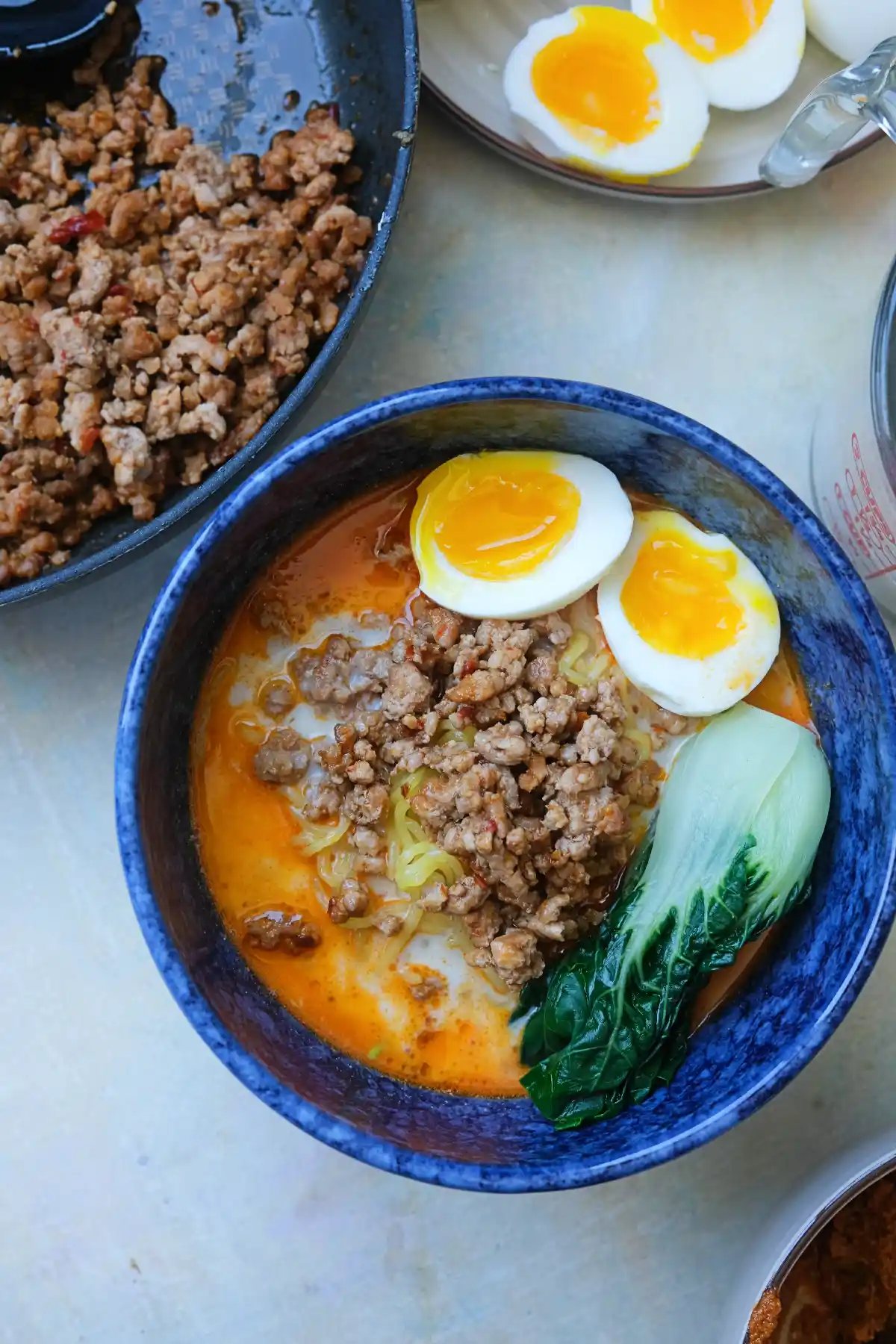
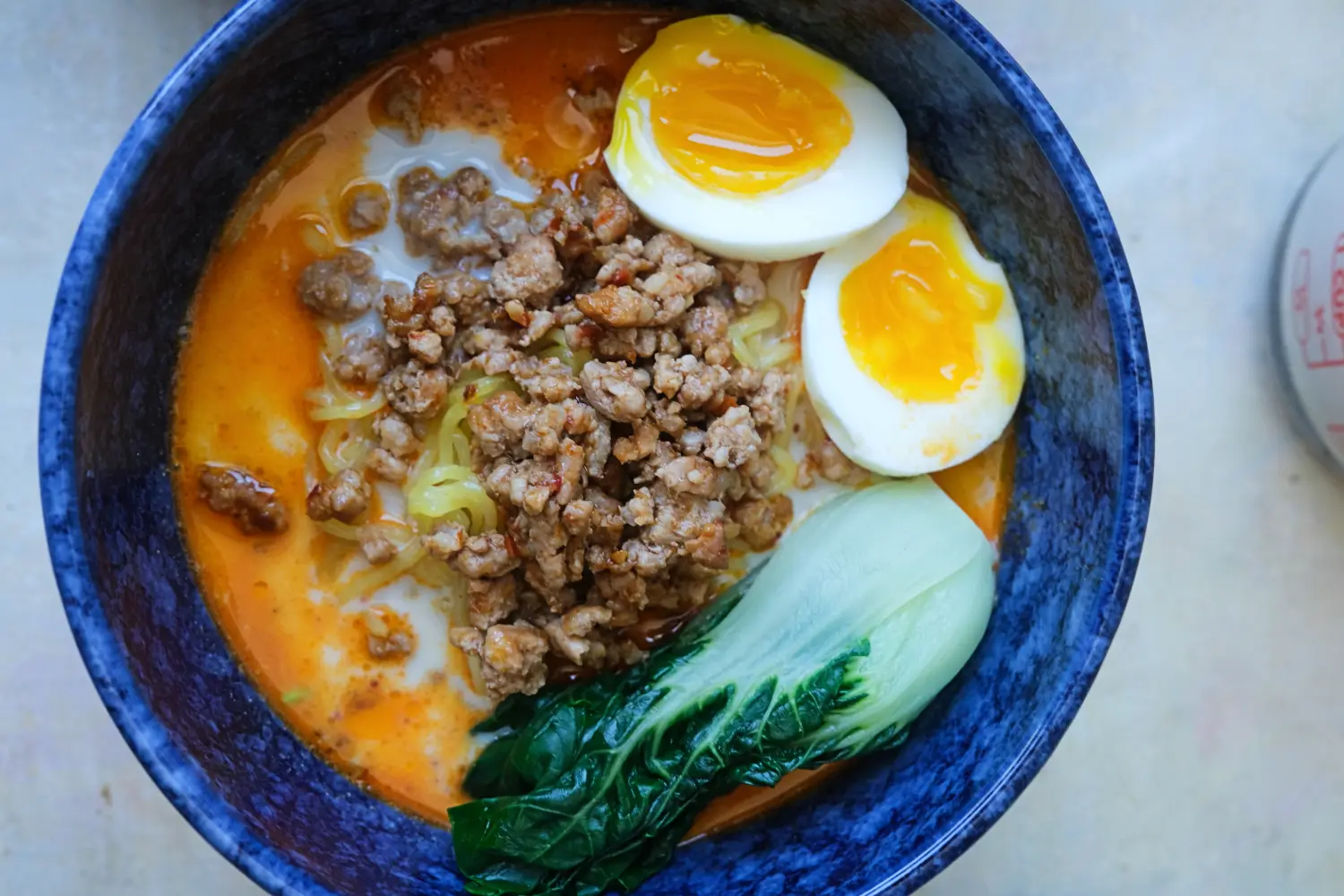
If you haven’t tried making tantanmen at home, you’re in for a treat. Between the creamy sesame broth, savory pork, chewy noodles, and jammy egg, every spoonful is creamy, nutty, and packed with umami.
Best part? It’s surprisingly easy to make.
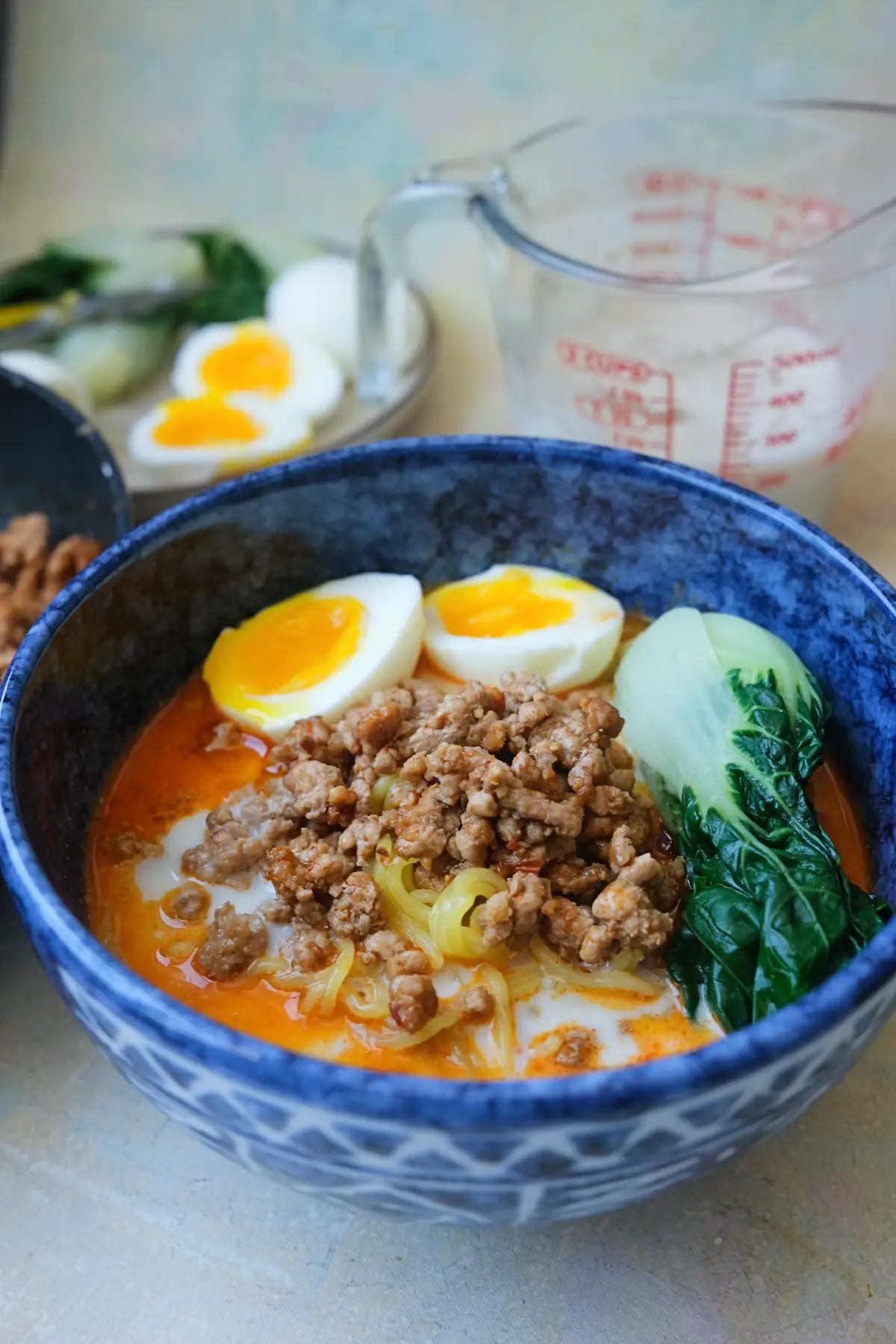
What Is Tantanmen Ramen?
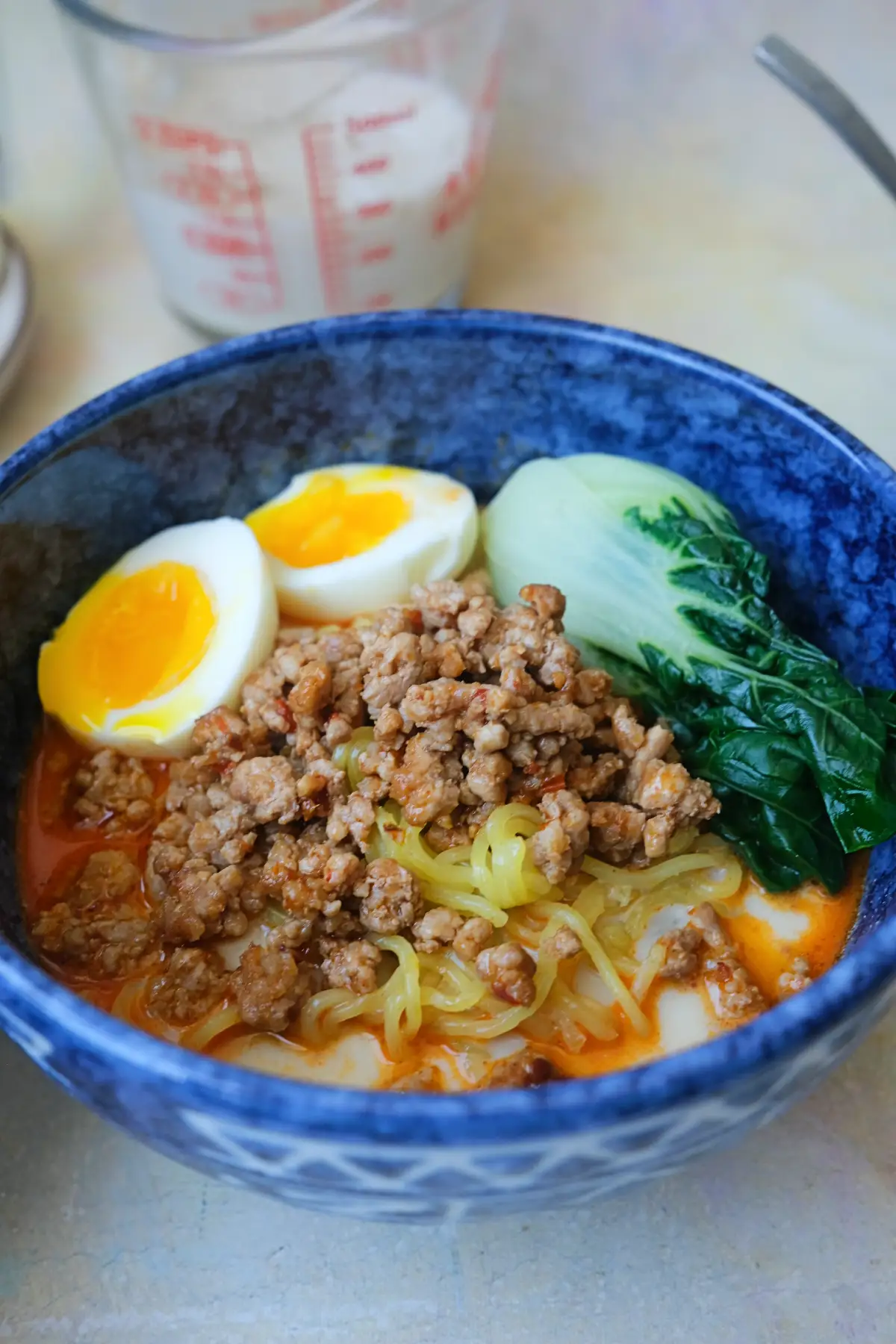
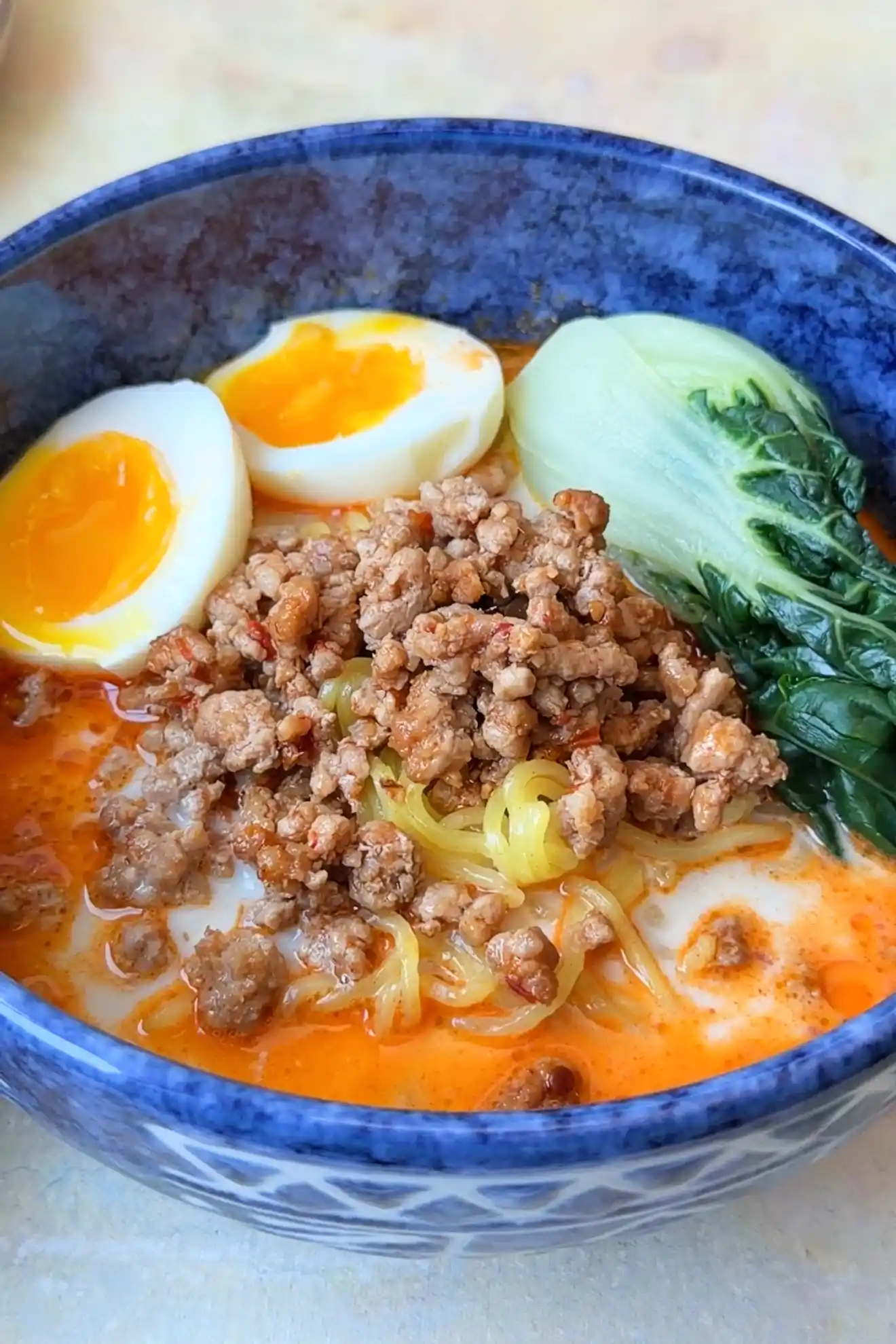
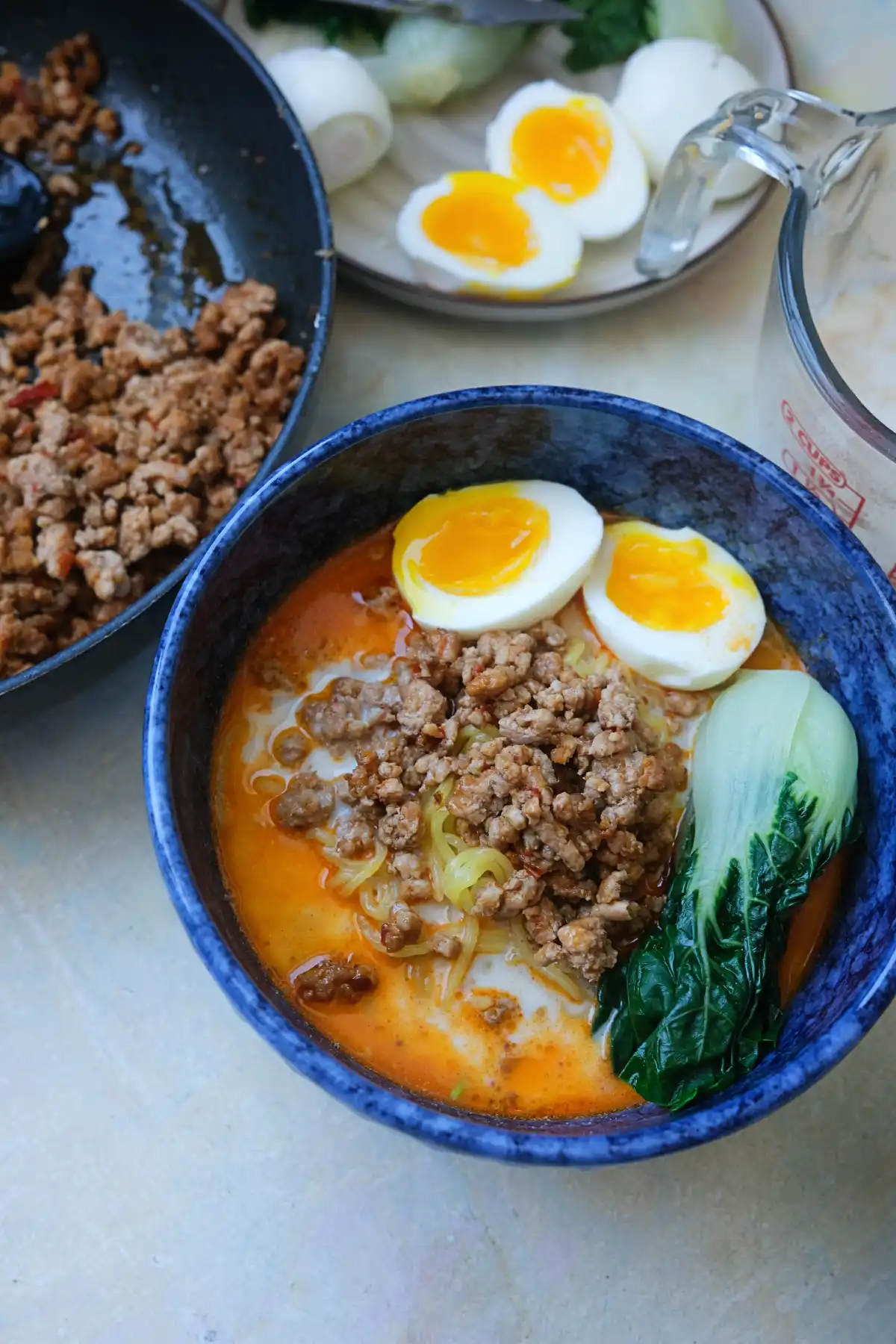
Tantanmen is a Japanese noodle soup inspired by Chinese dan dan noodles. It features a rich, creamy broth flavored with sesame paste, topped with seasoned ground pork, ramen noodles, and a soft-boiled egg. The broth is also savory, and nutty, with a little bit of heat.
Ingredients You’ll Need
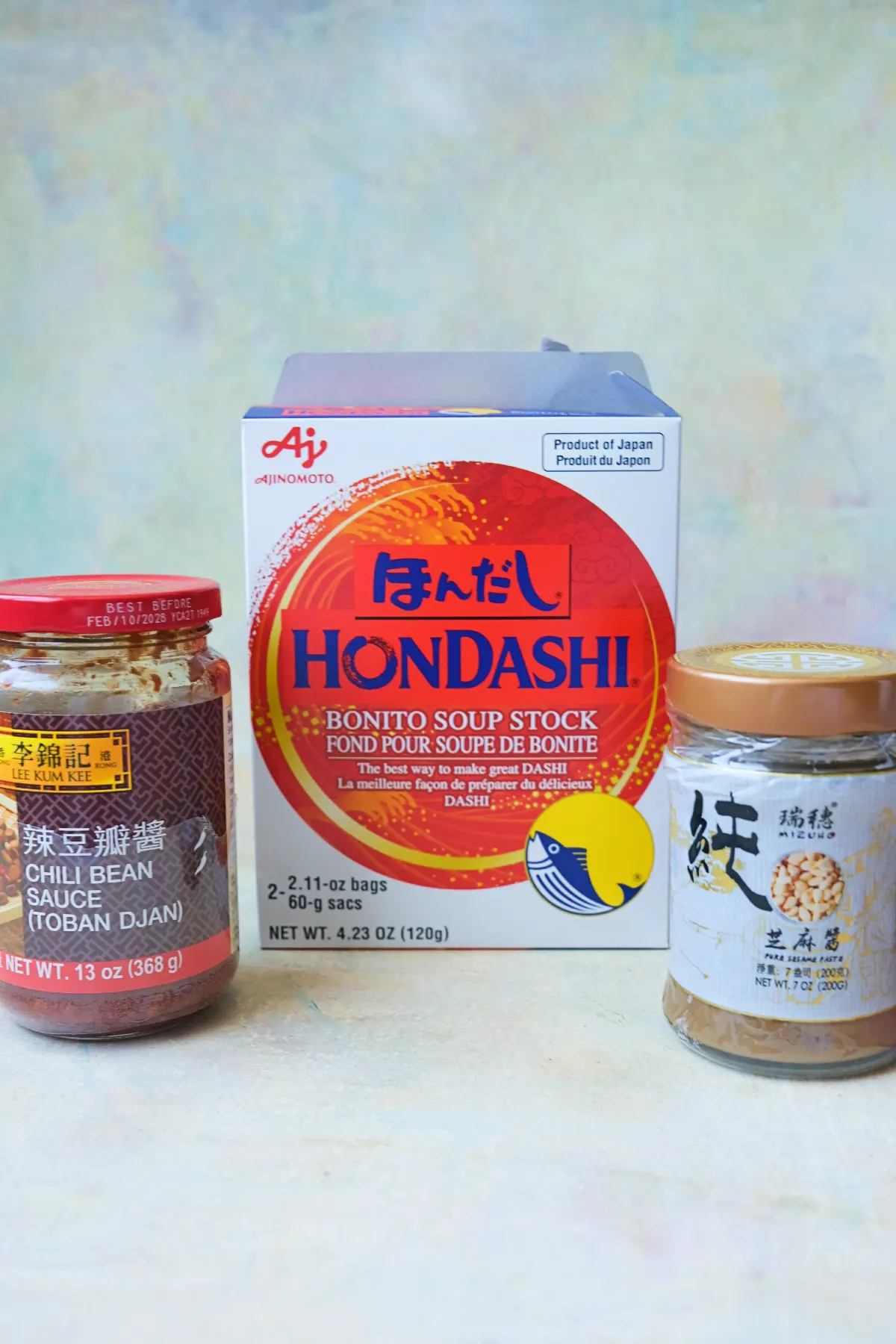
- Dashi granules. Most tantanmen recipes use chicken stock or broth, but I prefer dashi. It gives the broth a deeper umami flavor without making it heavy. You’ll mix it with water to create the base of the soup.
- Milk. I use whole milk because I like a richer, creamier broth. If you’d rather avoid dairy or want a broth that’s less likely to curdle, unsweetened soy milk works well, too.
- Sesame paste. This is what gives tantanmen its signature nutty flavor and creamy texture. Use peanut butter or tahini if you can’t find sesame paste..
- Doubanjiang. Doubanjiang is a spicy fermented bean paste made from broad beans and chili peppers. It’s a staple in Sichuan cooking and adds heat, saltiness, and savory flavor to the pork.
- Ground pork. Ground pork is the classic choice for tantanmen. The combination of garlic, ginger, doubanjiang, and soy sauce gives it a rich, savory flavor.
- Garlic and ginger. These aromatics add warmth and depth to the pork.
- Soy sauce. Used in both the sesame mixture and the pork for extra umami.
- Vinegar. A little acidity helps balance the rich broth.
- Chili oil. Adds heat and flavor. Adjust the amount to your preferred spice level.
- Spring onion. The white part is mixed into the sesame paste, while the green tops can be used as a garnish.
- Ramen noodles. Fresh ramen noodles have the best chewy texture, but dried ramen noodles work well, too.
- Soft-boiled eggs. A classic ramen topping that adds richness to every bowl.
- Bok choy. Adds freshness and a bit of crunch to balance the rich broth.
*Where to buy dashi, doubanjiang, and sesame paste: You can find all three at Asian grocery stores such as H Mart, 99 Ranch, Mitsuwa, and Tokyo Central. Dashi granules are usually in the soup or seasoning aisle, while doubanjiang and sesame paste are found with the sauces and condiments.
How to Make Tantanmen Ramen
1. Prep.
Get your ingredients and toppings ready. Mince the garlic, grate the ginger, and thinly slice the spring onion. Soft-boil the eggs for 7 minutes, then transfer them to an ice bath. Cook the ramen noodles according to the package directions and blanch the bok choy until tender-crisp.
2. Make the broth
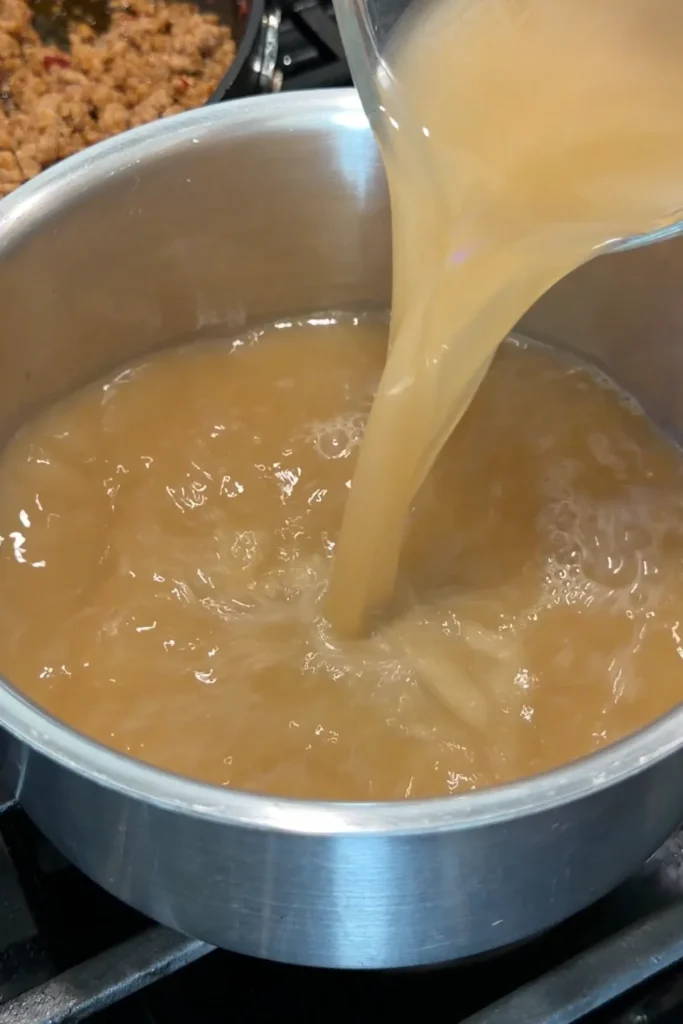
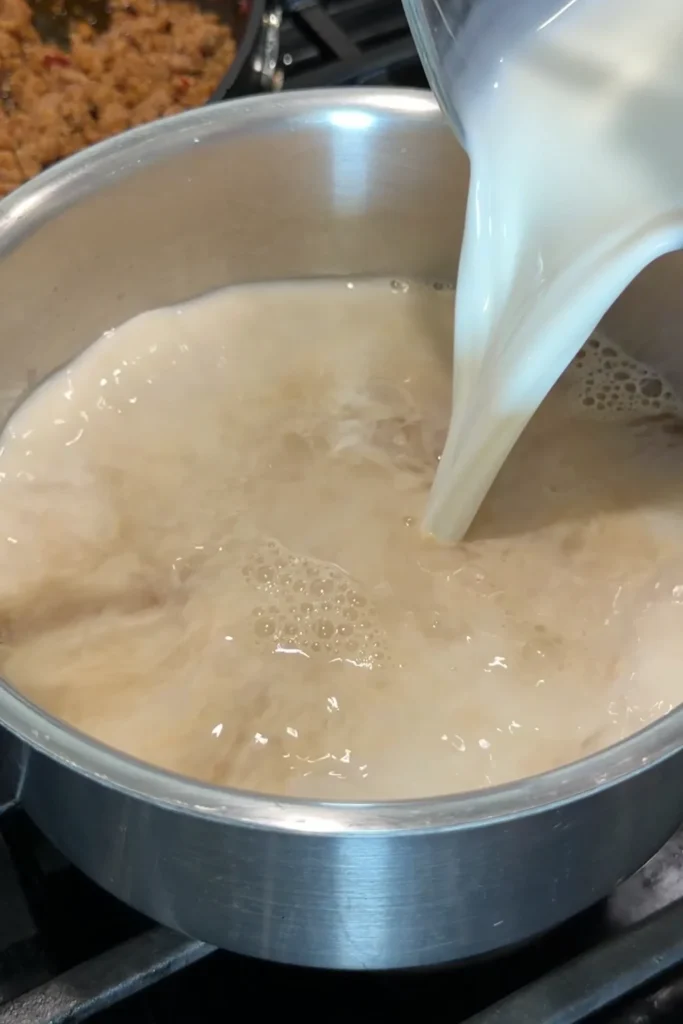
In a saucepan, combine the water, dashi granules, and milk. Heat over medium heat until hot but not boiling. Keep warm while you prepare the remaining components.
3. Prepare the sesame paste mixture
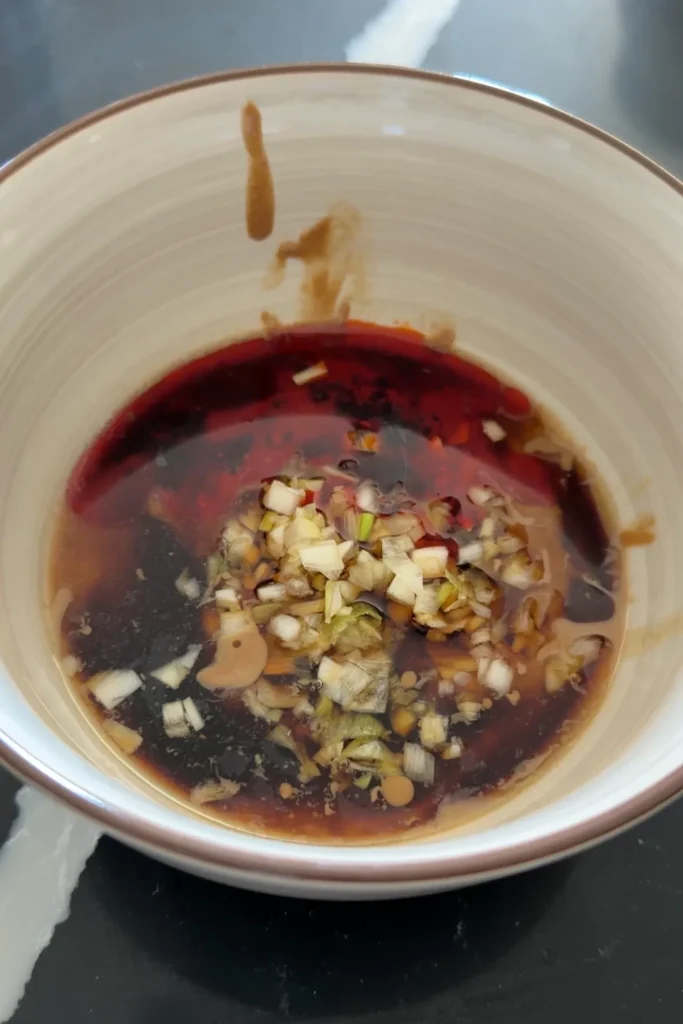
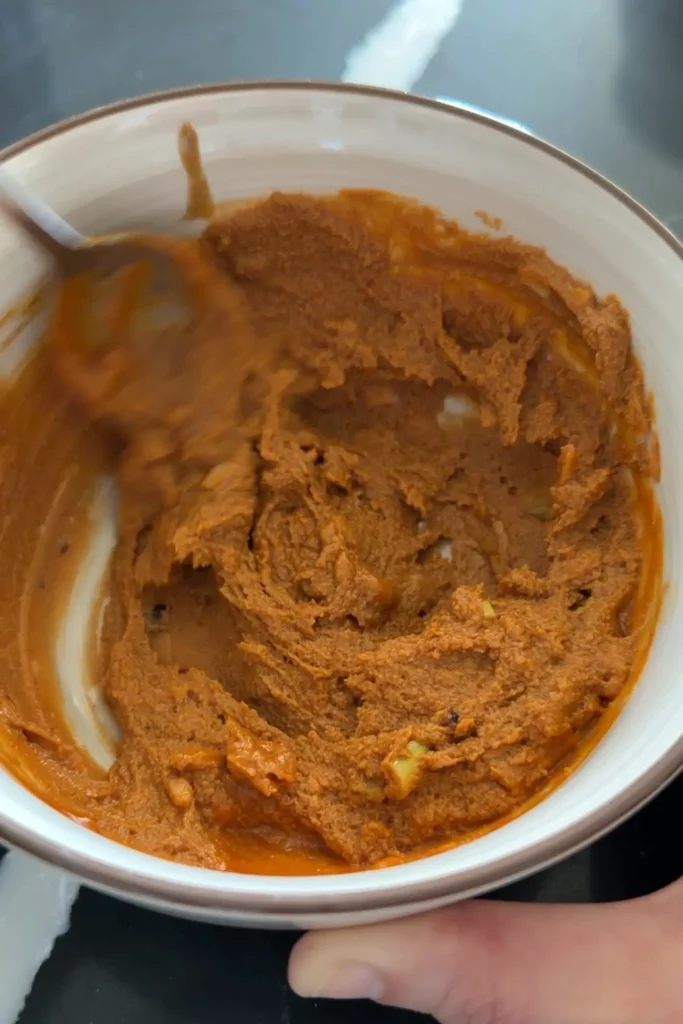
In a small bowl, mix together the sesame paste, soy sauce, vinegar, minced spring onion, and chili oil until smooth. Set aside.
4. Cook the pork
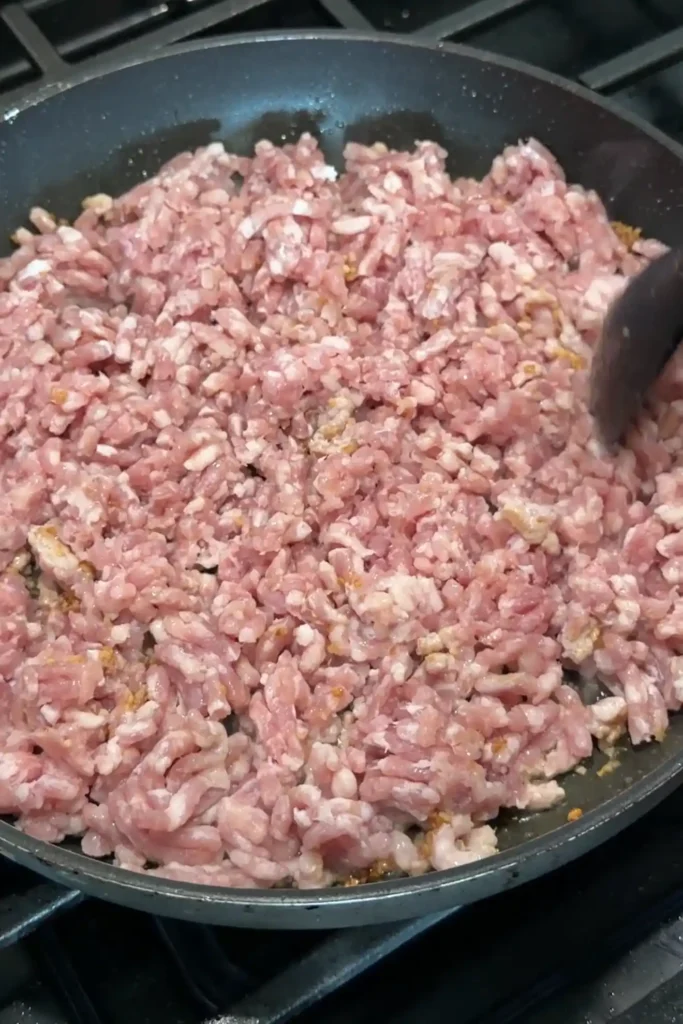
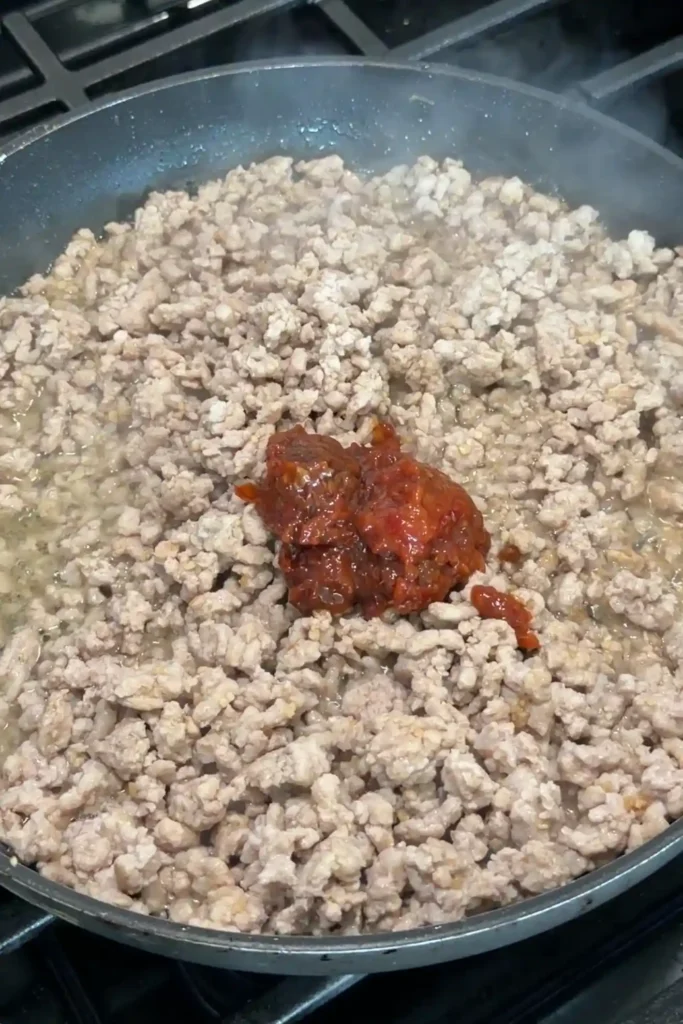
Heat a skillet over medium-high heat. Add oil, then sauté the garlic and ginger for about 30 seconds, or until fragrant.
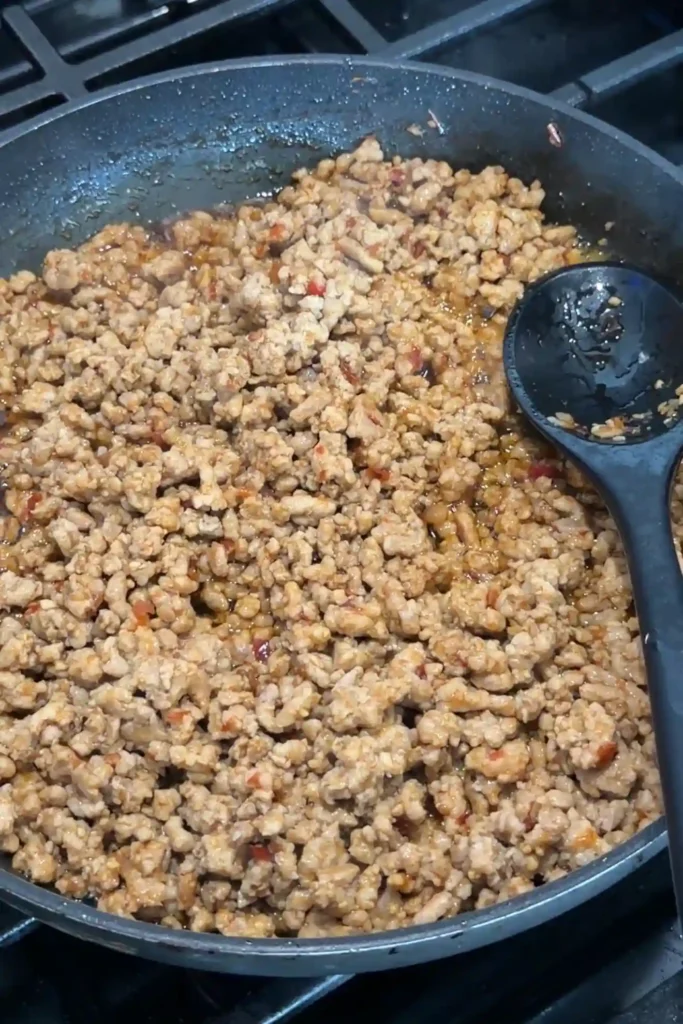
Add the ground pork and cook until browned, breaking it up into small pieces as it cooks. Stir in the doubanjiang and soy sauce, then cook for another 1 to 2 minutes until well combined.
5. Assemble the bowls
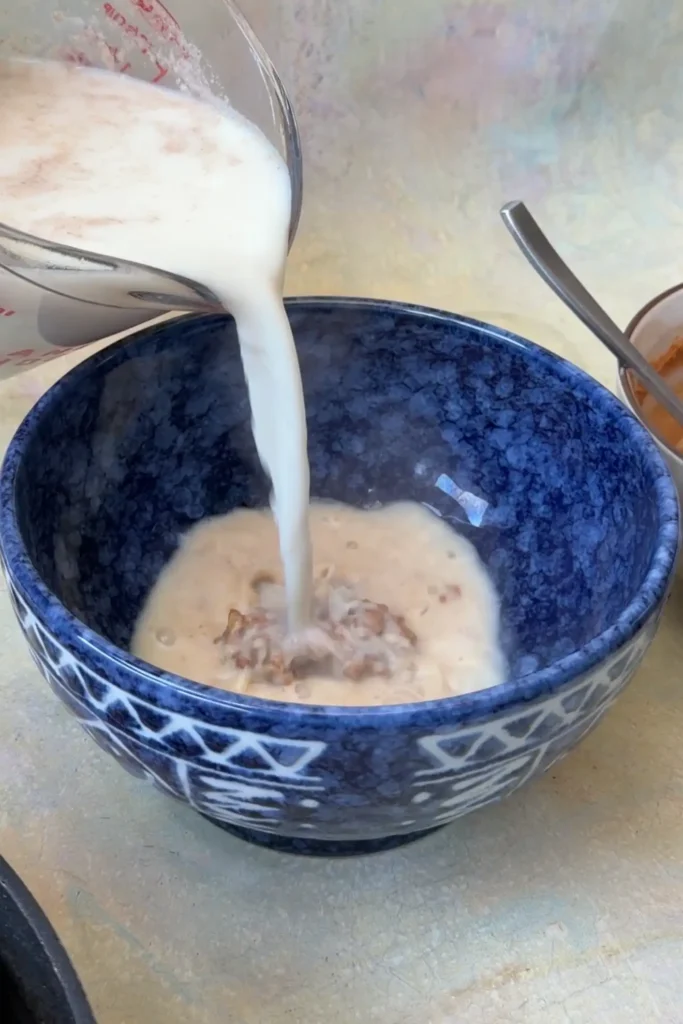
Add a spoonful of the sesame paste mixture to each serving bowl. Pour in about 1 cup of the hot broth and stir until combined.
6. Add the noodles and toppings
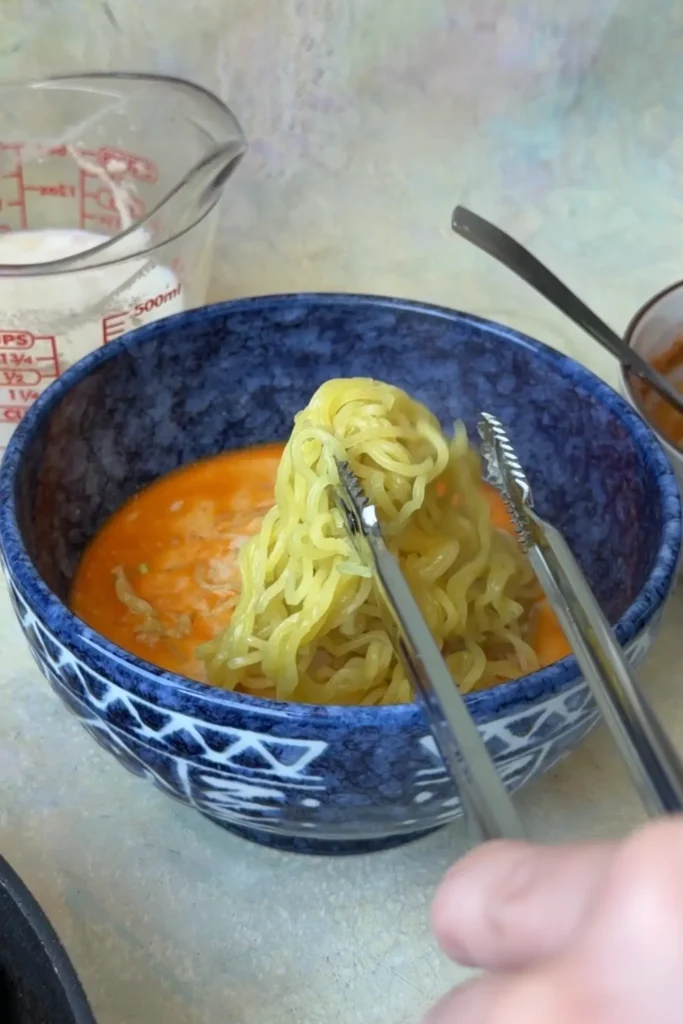
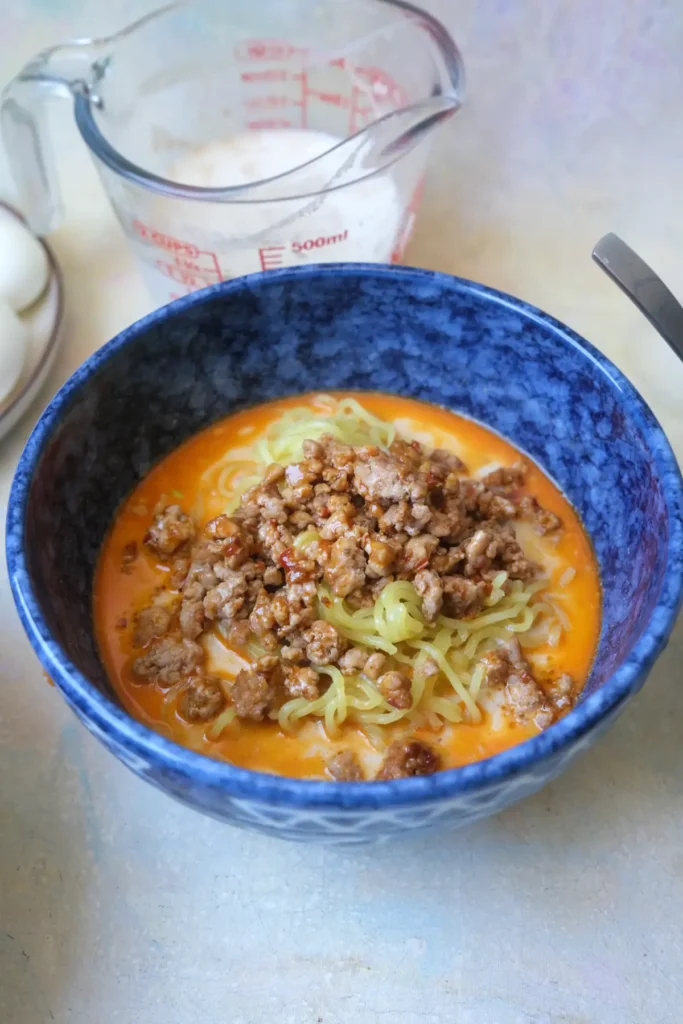
Divide the cooked ramen noodles among the bowls. Top with the seasoned pork, soft-boiled egg, and bok choy. Serve and enjoy!
Tips for the Best Tantanmen Ramen
- Prep the toppings ahead of time. That way, you can assemble the bowls as soon as the broth is ready.
- Don’t boil the broth. Since we’re using whole milk, keep the heat gentle and avoid bringing it to a boil to prevent curdling. If you’d rather not worry about curdling, you can use unsweetened soy milk instead.
- Start with a small amount of sesame paste. You can always add more broth if the flavor is too strong.
- Make it spicier. Add extra chili oil, more doubanjiang, or a spoonful of chili crisp before serving.
- Try different proteins. Ground chicken, turkey, or beef all work well in place of pork.
- Add extra toppings. For extra flavor, texture, and presentation, add green onions, sesame seeds, corn, bean sprouts, bamboo shoots, or nori.
Tantanmen vs. Dan Dan Noodles
Tantanmen is the Japanese version of Chinese dan dan noodles. Both dishes feature noodles, ground meat, and a sesame-based sauce, but there are a few key differences.
Tantanmen comes in a rich, creamy broth, while dan dan noodles are much drier. The sauce is usually more concentrated, with a stronger Sichuan peppercorn flavor and a higher level of heat.
While the two dishes share the same roots, tantanmen is generally milder, creamier, and more soup-like, while dan dan noodles are bolder, spicier, and more sauce-focused.
What to Serve With Tantanmen Ramen
Tantanmen is a complete meal on its own, but these sides pair well with it.
- Gyoza
- Edamame
- Chicken Karaage
- Seaweed Salad
- Takoyaki
How to Store and Reheat Leftovers
Store the broth, pork, and noodles in separate airtight containers in the refrigerator for up to 3 days. Keep the components separate to prevent the noodles from soaking up too much broth and getting mushy.
To reheat, warm the broth in a saucepan over medium heat until hot. Reheat the pork in the microwave or a skillet. If the noodles have already been mixed with the broth, reheat them gently in the microwave. Assemble the bowl and add the egg and bok choy before serving.
Frequently Asked Questions
Is tantanmen spicy?
My tantanmen recipe has a little heat from chili oil and doubanjiang, but it’s easy to adjust. If you’re sensitive to spice, use less chili oil. If you like things hotter, add an extra drizzle on top before serving.
What noodles are used for tantanmen?
Fresh ramen noodles are my favorite for tantanmen because they have the perfect chewy texture. You can find fresh ramen noodles at most Asian grocery stores, in the refrigerated section near tofu, wonton wrappers, and dumpling wrappers.
Can I make tantanmen ahead of time?
Yes, but store the broth, pork, and noodles separately. The noodles will soak up the broth and become soft if they sit too long. When you’re ready to eat, reheat the broth and pork, cook the noodles, and assemble your bowl.
The sesame paste mixture can also be made a day or two in advance.
More Recipes You’ll Love
Tantanmen Ramen Recipe
Ingredients
- 4 cups water
- 4 tablespoons dashi granules
- 2 cups milk
- 3 tablespoons sesame paste
- 1 tablespoon soy sauce
- 1 tablespoon vinegar
- 1 spring onion white part only, minced
- 1 tablespoon chili oil
- 1 tablespoon oil
- 1 tablespoon minced garlic
- 2 teaspoons grated ginger
- 1 pound ground pork
- 2 tablespoons doubanjiang
- 1 tablespoon soy sauce
- 4 servings ramen noodles cooked
- 4 soft-boiled eggs
- 4 heads baby bok choy blanched
Instructions
- Before you start cooking, get all the toppings and ingredients ready. Mince the garlic and spring onion and grate the ginger. Soft-boil the eggs for 7 minutes, then transfer them to an ice bath. Cook the ramen noodles according to the package directions and blanch the bok choy until tender-crisp.
- In a saucepan, combine the water, dashi granules, and milk. Heat over medium-low heat until hot but not boiling. Keep warm.
- In a small bowl, mix together the sesame paste, soy sauce, vinegar, minced spring onion, and chili oil. Set aside.
- Heat a skillet over medium-high heat. Add oil, then sauté the garlic and ginger for about 30 seconds, or until fragrant.
- Add the ground pork and cook until browned, breaking it up into small pieces as it cooks. Stir in the doubanjiang and soy sauce, then cook for another 1 to 2 minutes until well combined.
- Divide the sesame paste mixture among 4 serving bowls, using about a spoonful per bowl.
- Pour about 1 cup of the hot broth into each bowl and stir until the sesame paste mixture is dissolved and evenly combined.
- Add the cooked ramen noodles. Top with the seasoned pork, soft-boiled egg, and bok choy. Serve and enjoy!
Notes
- This recipe makes more pork topping than you’ll need for 4 bowls of ramen. Use about 3 to 4 spoonfuls of pork per serving and save the leftovers for additional bowls throughout the week.
- Start with a small amount of the sesame paste mixture, then add more broth as needed until the flavor reaches your preferred strength.
- Adjust the amount of chili oil to make the broth milder or spicier.
- The broth should be hot but not boiling to prevent the milk from curdling.





3 Responses
This really looks so yummy. I want to try and cook this but the ingredients might be harder to find here in our place.
This was so good and easy to make. Definitely making this again.
So yummy!!!