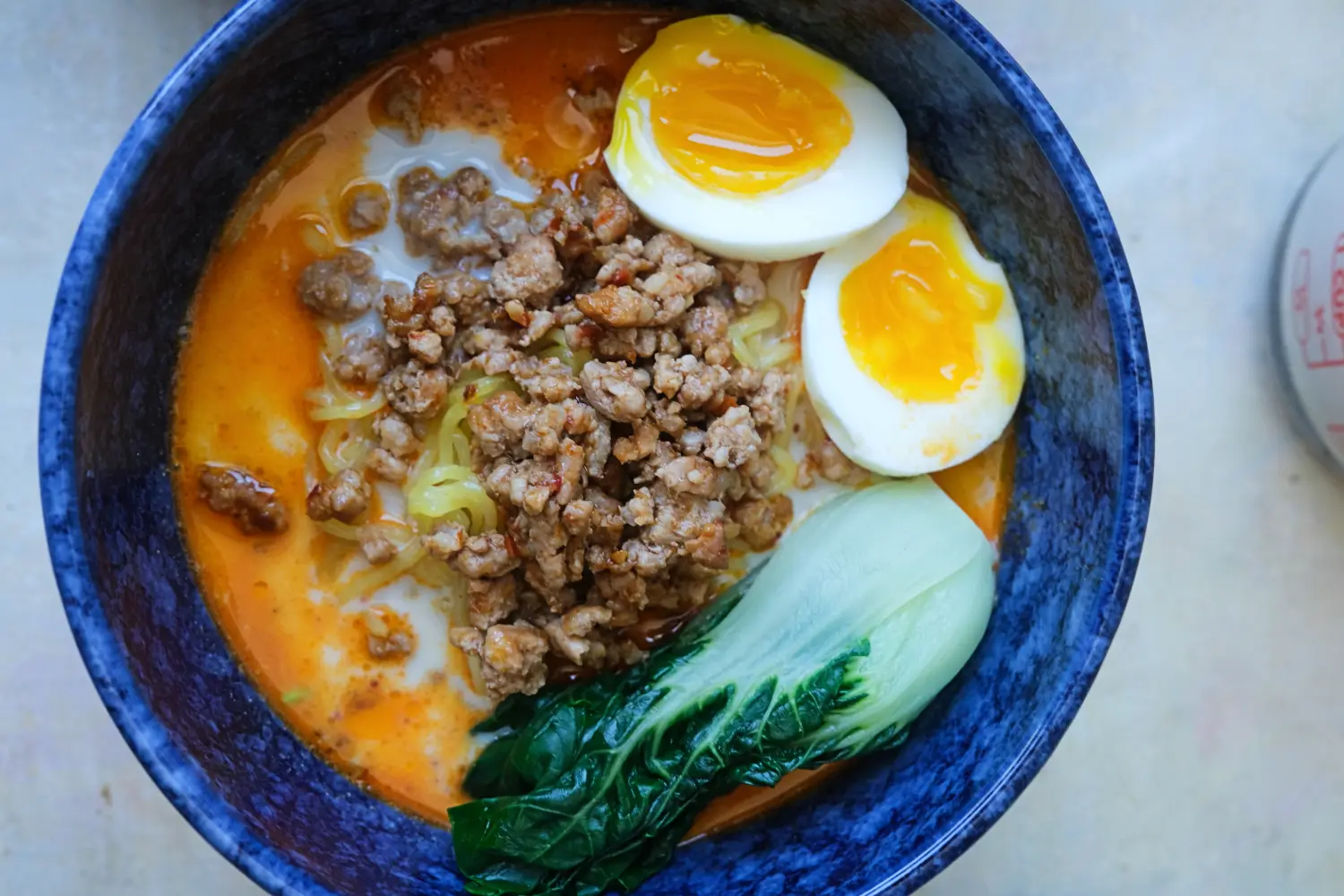
Tantanmen Ramen Recipe
Ingredients
Broth
- 4 cups water
- 4 tablespoons dashi granules
- 2 cups milk
Sesame Paste Mixture
- 3 tablespoons sesame paste
- 1 tablespoon soy sauce
- 1 tablespoon vinegar
- 1 spring onion white part only, minced
- 1 tablespoon chili oil
Pork
- 1 tablespoon oil
- 1 tablespoon minced garlic
- 2 teaspoons grated ginger
- 1 pound ground pork
- 2 tablespoons doubanjiang
- 1 tablespoon soy sauce
For Serving
- 4 servings ramen noodles cooked
- 4 soft-boiled eggs
- 4 heads baby bok choy blanched
Instructions
- Before you start cooking, get all the toppings and ingredients ready. Mince the garlic and spring onion and grate the ginger. Soft-boil the eggs for 7 minutes, then transfer them to an ice bath. Cook the ramen noodles according to the package directions and blanch the bok choy until tender-crisp.
- In a saucepan, combine the water, dashi granules, and milk. Heat over medium-low heat until hot but not boiling. Keep warm.
- In a small bowl, mix together the sesame paste, soy sauce, vinegar, minced spring onion, and chili oil. Set aside.
- Heat a skillet over medium-high heat. Add oil, then sauté the garlic and ginger for about 30 seconds, or until fragrant.
- Add the ground pork and cook until browned, breaking it up into small pieces as it cooks. Stir in the doubanjiang and soy sauce, then cook for another 1 to 2 minutes until well combined.
- Divide the sesame paste mixture among 4 serving bowls, using about a spoonful per bowl.
- Pour about 1 cup of the hot broth into each bowl and stir until the sesame paste mixture is dissolved and evenly combined.
- Add the cooked ramen noodles. Top with the seasoned pork, soft-boiled egg, and bok choy. Serve and enjoy!
Notes
- This recipe makes more pork topping than you'll need for 4 bowls of ramen. Use about 3 to 4 spoonfuls of pork per serving and save the leftovers for additional bowls throughout the week.
- Start with a small amount of the sesame paste mixture, then add more broth as needed until the flavor reaches your preferred strength.
- Adjust the amount of chili oil to make the broth milder or spicier.
- The broth should be hot but not boiling to prevent the milk from curdling.
Nutrition
Serving1 servingCalories540 kcalCarbohydrates45 gProtein29 gFat24 gSaturated Fat8 gPolyunsaturated Fat4 gMonounsaturated Fat10 gCholesterol205 mgSodium1250 mgPotassium500 mgFiber3 gSugar5 gVitamin A2500 IUVitamin C12 mgCalcium140 mgIron3 mg