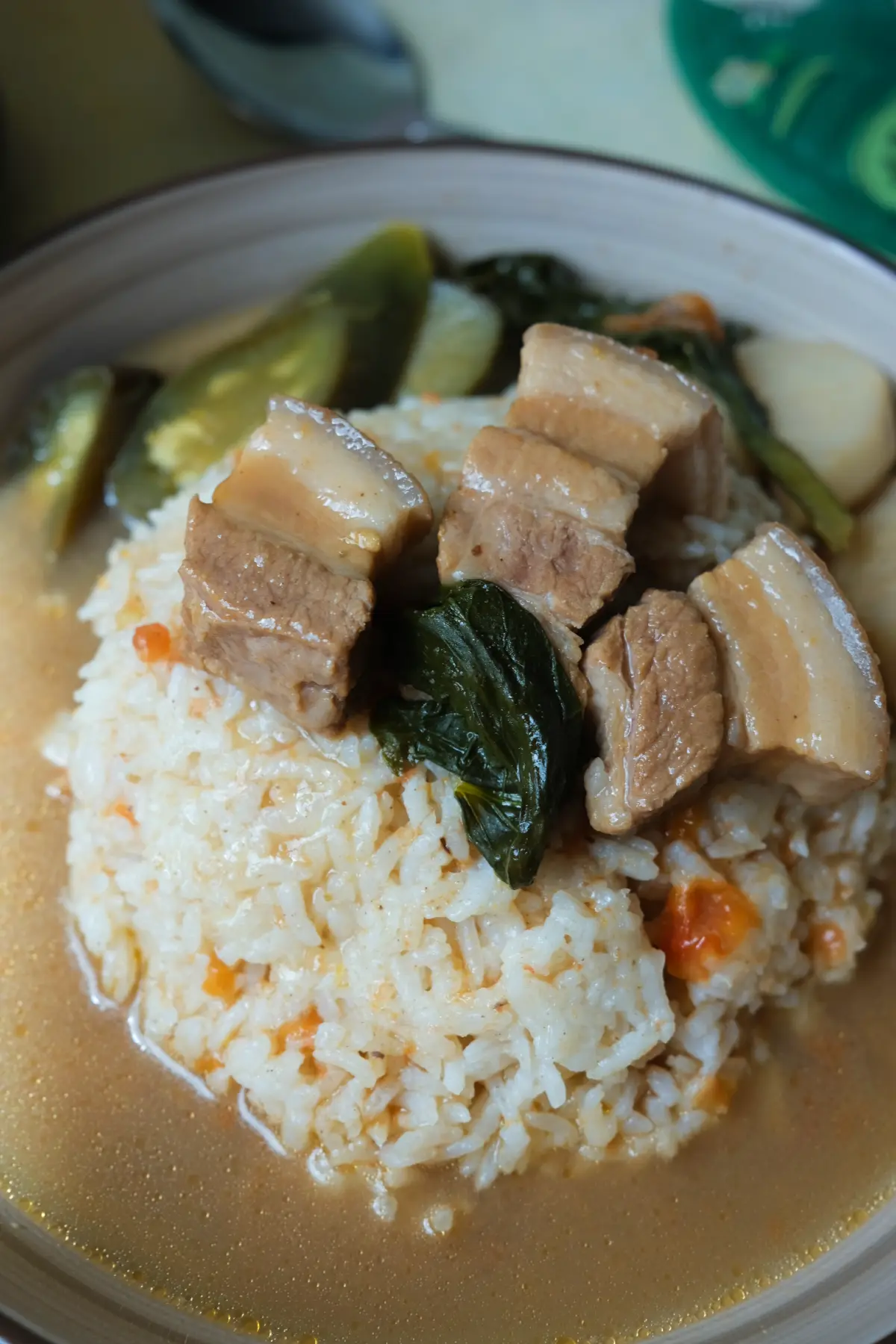
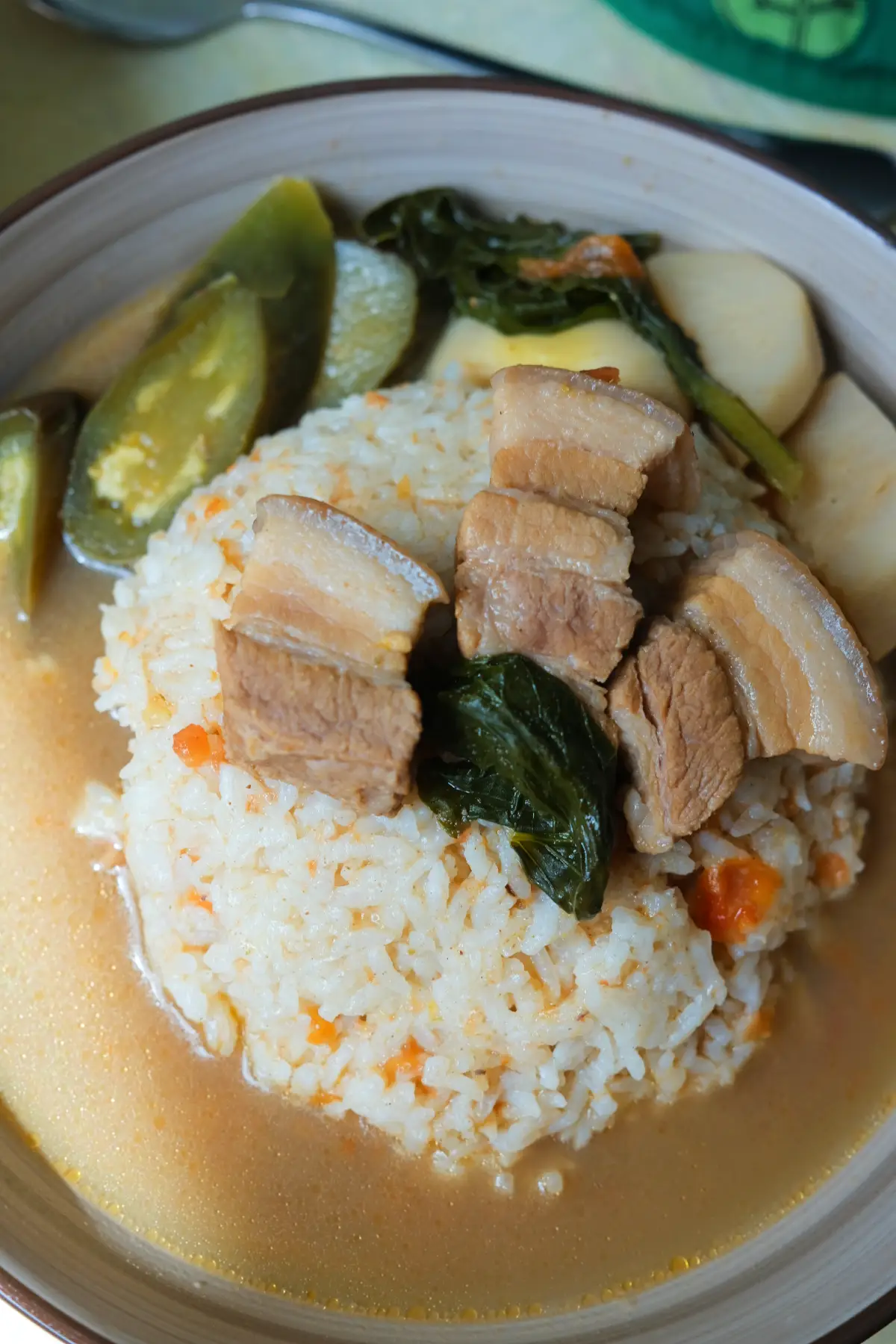
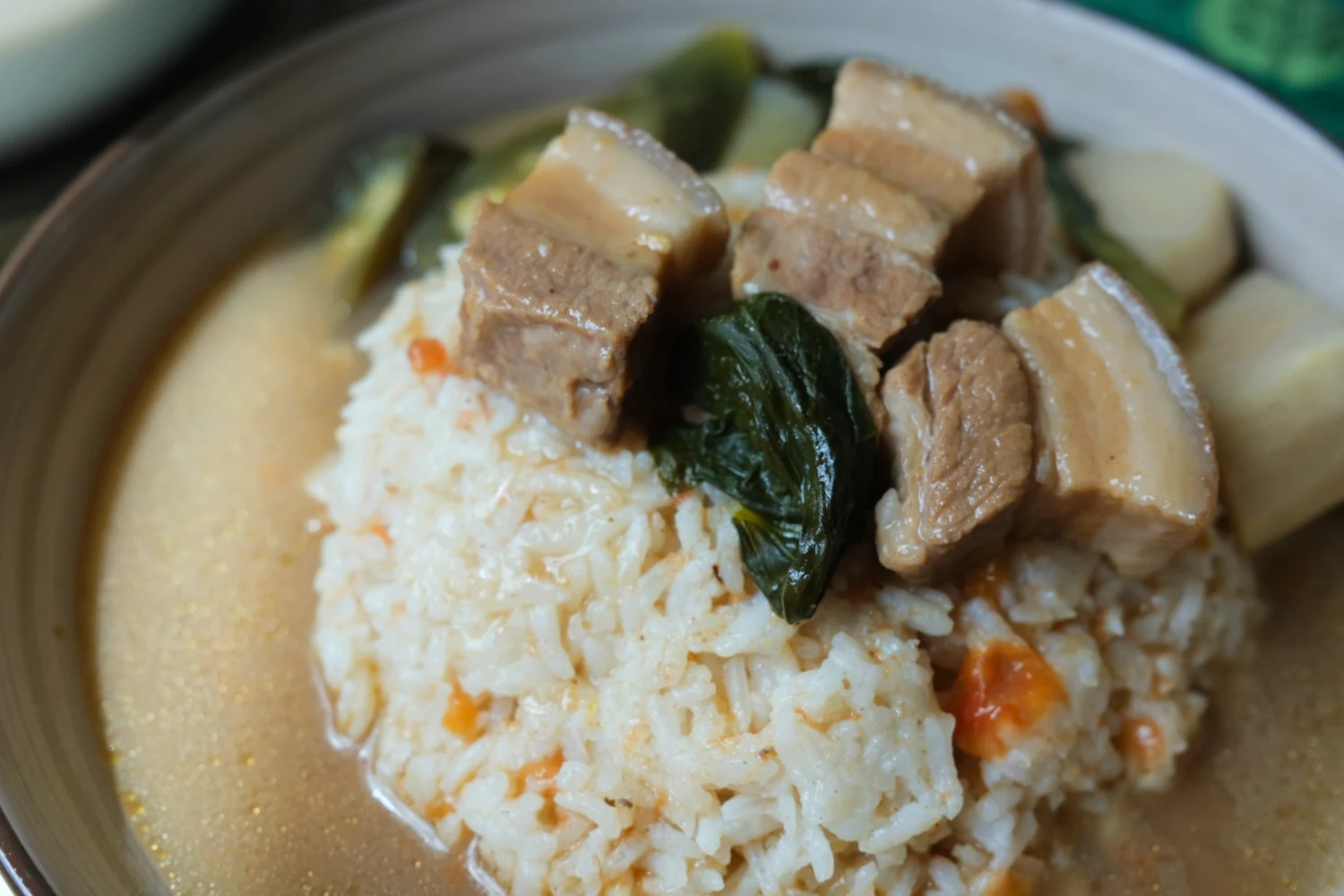
Learn how to make Pork Sinigang with tender pork belly, hearty vegetables, and a deliciously sour broth. It’s easy, comforting, and full of flavor.
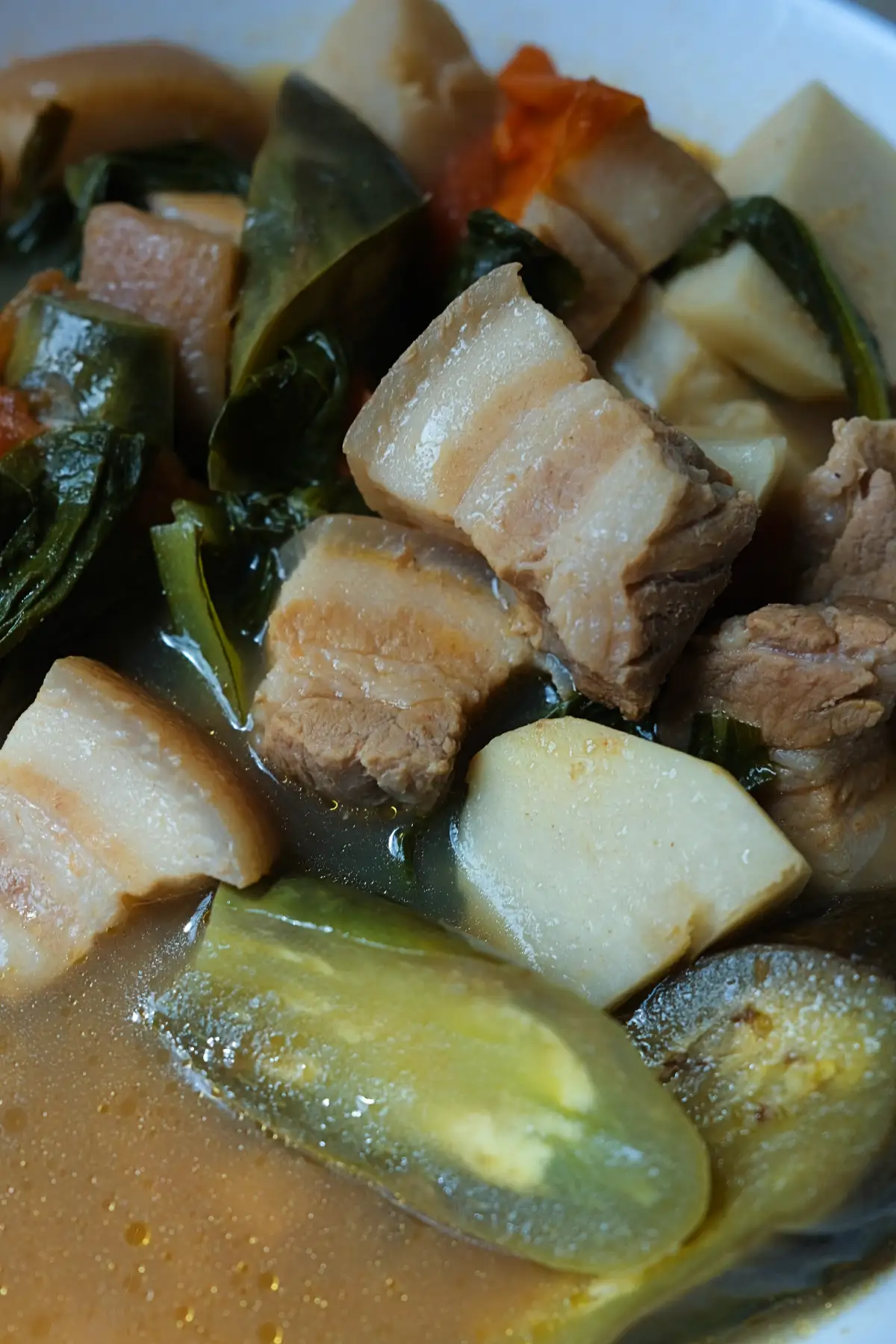
Sinigang, a Filipino dish with a distinctly sour and savory broth, is a regular at family dinners across the Philippines.
The sour broth is the defining feature, and for many Filipinos, the more it makes your mouth pucker, the better! But really, it’s entirely up to you how sour you want it.
That’s the beauty of sinigang: you can make it your own. Choose your souring agent, whether it’s tamarind, kamias, guava, or green mango. Pick your protein, load it up with your favorite vegetables, and adjust the sourness how you like it. Almost anything goes, and it’s always delicious.
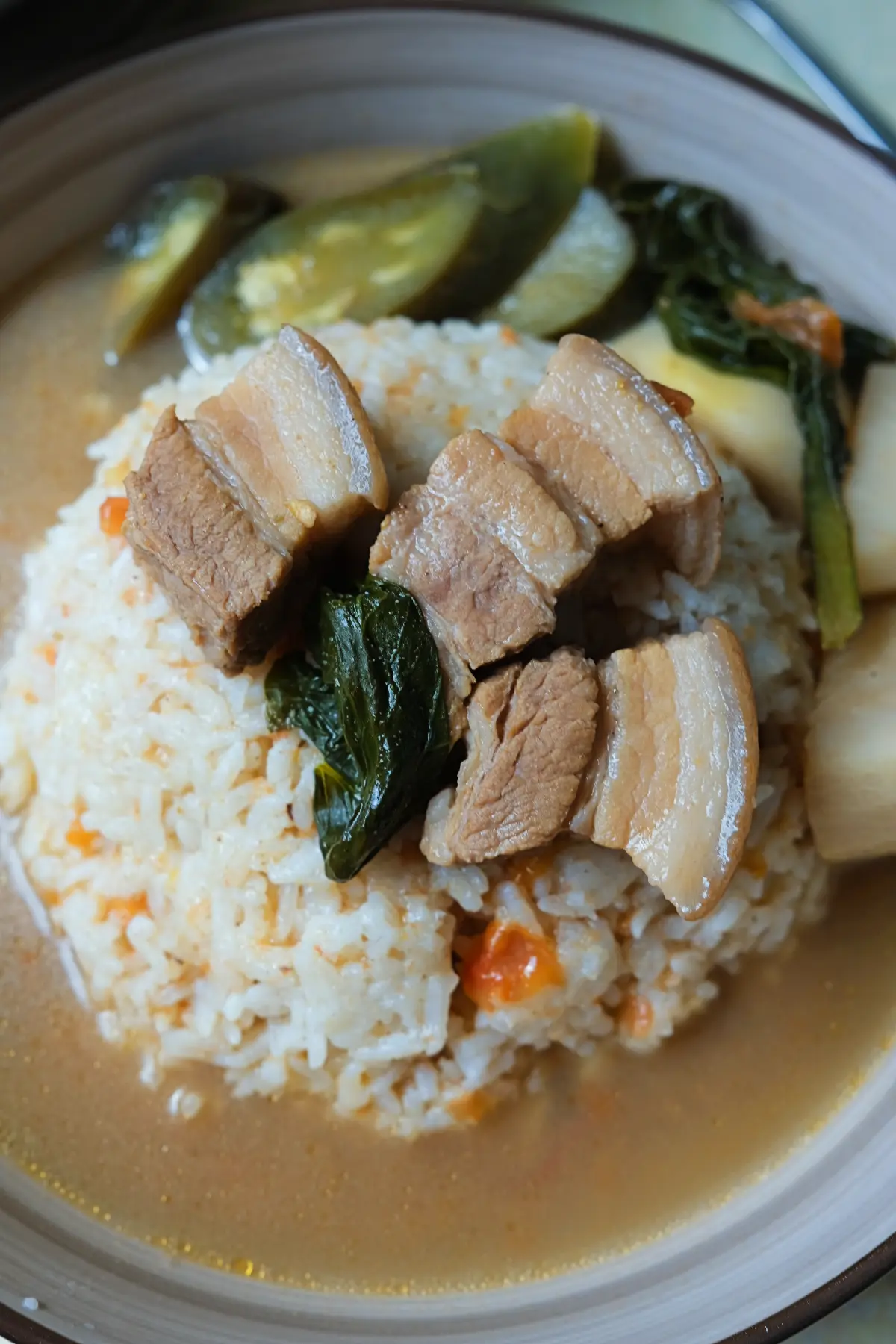
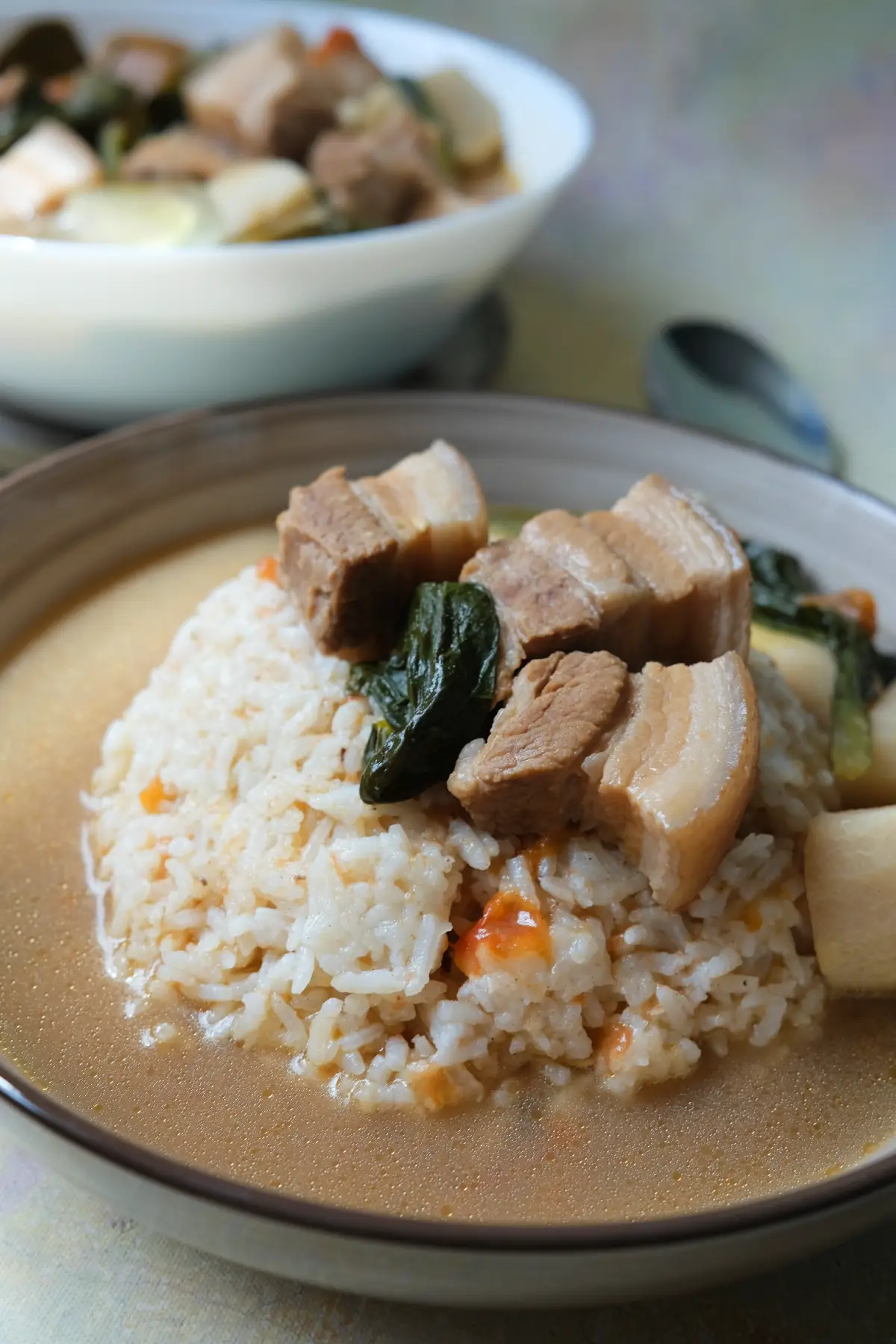
And of course, serve it with a mountain of rice!
What Is Sinigang?
Sinigang is a traditional Filipino soup or stew characterized by its sour, savory broth. The name comes from the Tagalog verb sigang, meaning “to stew” or “to cook by boiling”.
The dish can be made with pork, beef, fish, or shrimp and a variety of vegetables. Its defining sourness traditionally comes from ingredients such as tamarind (sampalok), kamias, guava, or green mango, although packaged sinigang mix is widely used today.
Pork sinigang, known as sinigang na baboy, is the pork version of the dish.
Ingredients
- Pork belly. Rich and fatty, which gives the broth plenty of flavor. Pork ribs or shoulder also work well.
- Water. For the base of the sinigang broth.
- Tomato. Adds a little sweetness and acidity to the broth.
- Onion. Adds a savory flavor and mellows as it cooks.
- Sinigang mix. Use your favorite brand and flavor. I use two sachets for a bold, sour broth.
- Vegetables. Use your favorites! Eggplant, okra, long beans, radish, taro, bok choy, kangkong, and other leafy greens are all great options.
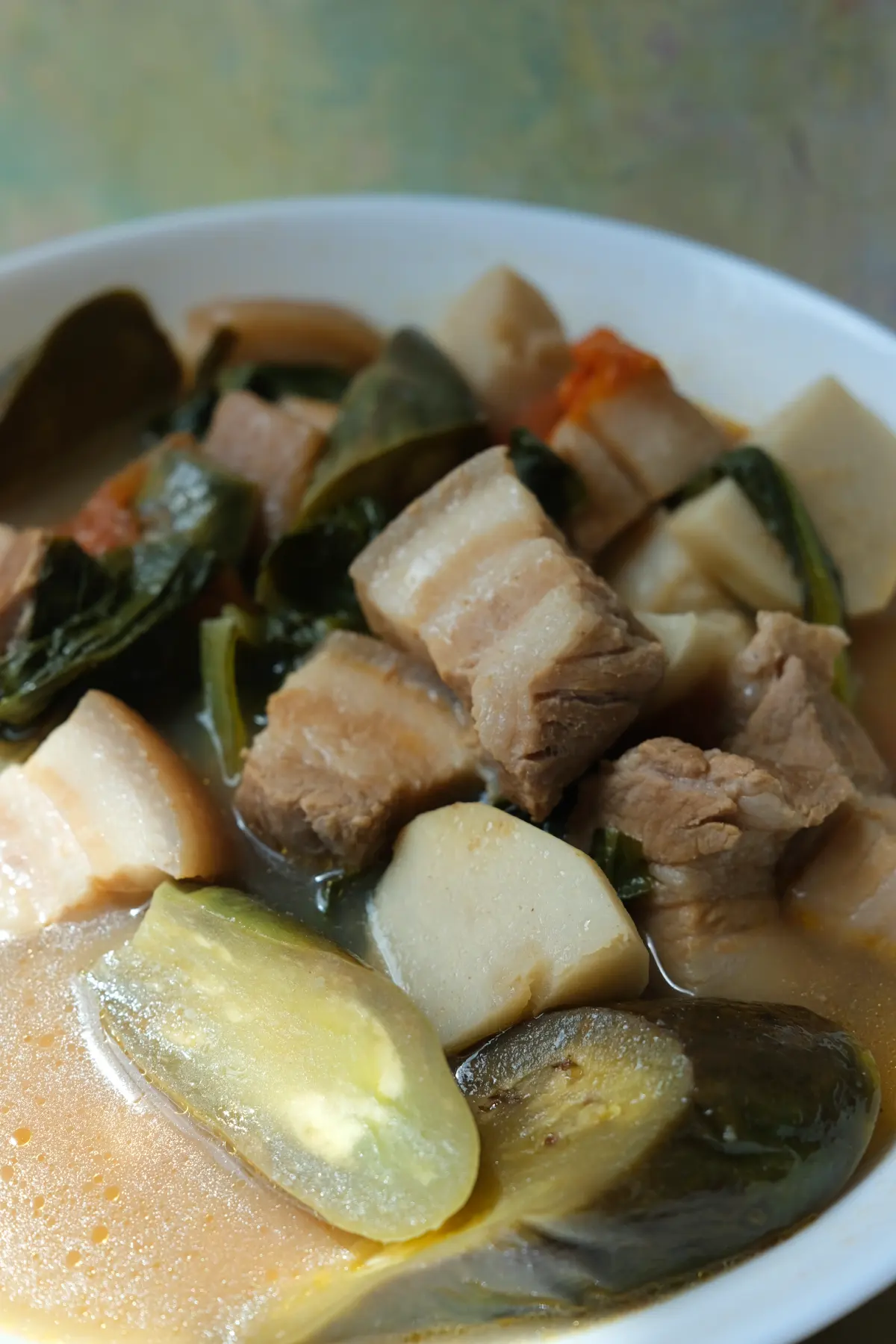
How to Make Pork Sinigang
This pork sinigang recipe is super easy and mostly hands-off. Once the pork is simmering, all you need to do is add the vegetables at the right time.
1. Start the broth.
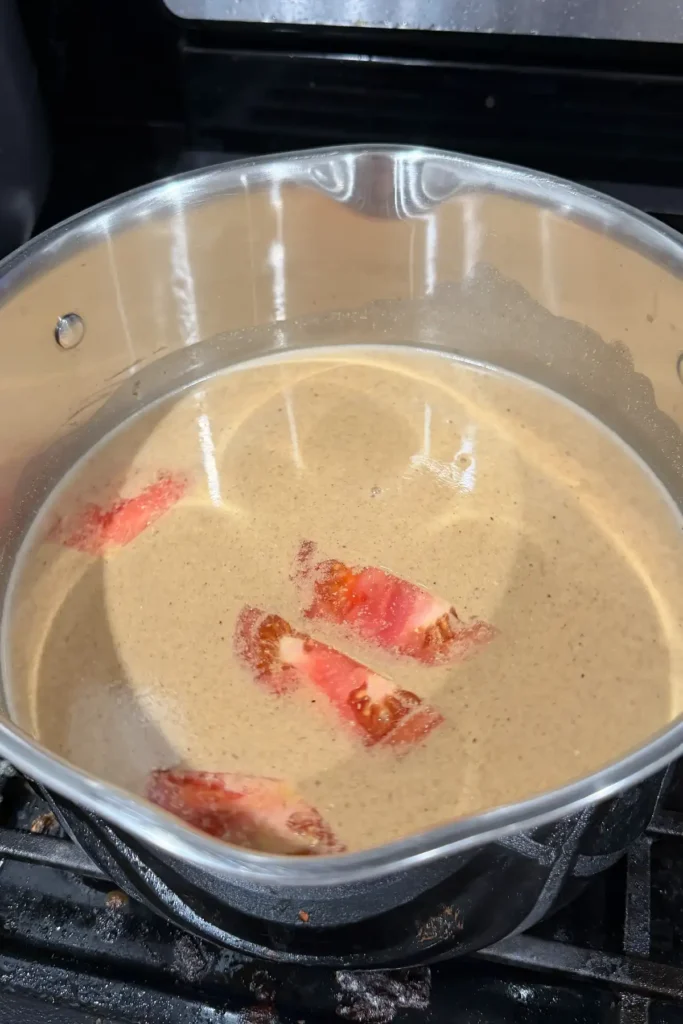
Add the water, tomato, onion, and sinigang mix to a large pot. Season with fish sauce. Stir and bring to a boil.
2. Add the pork.
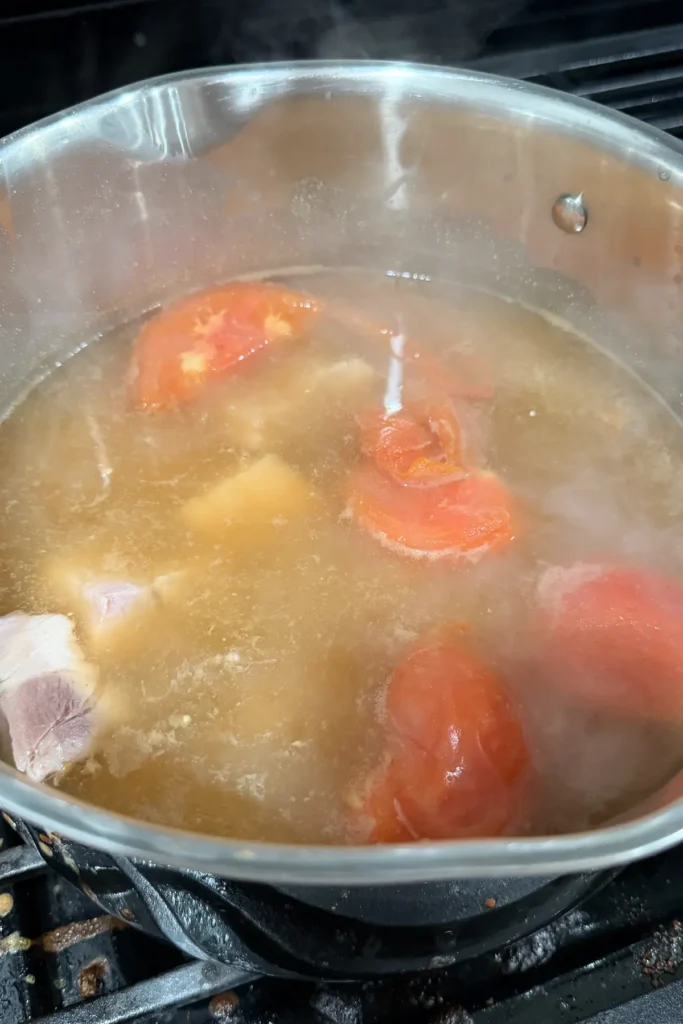
Add the pork belly and bring the broth back to a boil. Reduce the heat and simmer for about 30 minutes, or until the pork is tender.
3. Add the vegetables.
If using taro, add it first and simmer for about 10 minutes. Add the eggplant, okra, long beans, or other vegetables and cook for another 5-7 minutes. Add leafy greens during the last 1-2 minutes.
4. Serve and enjoy!
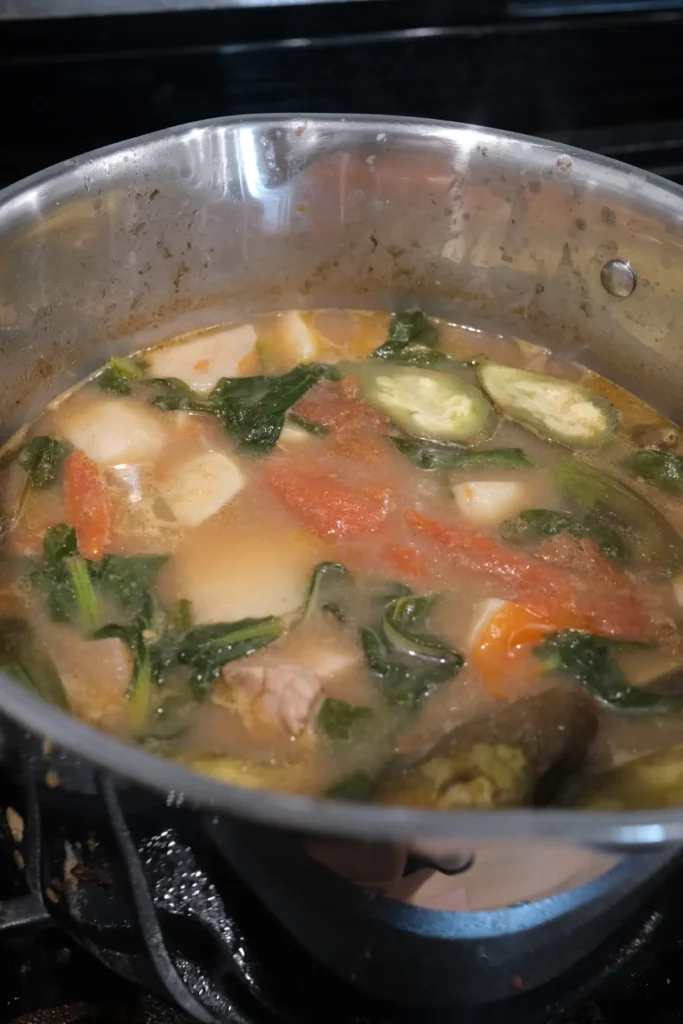
Taste and adjust the seasoning or sourness if needed. Serve with rice and enjoy!
Tips for the Best Pork Sinigang
- Choose pork with some fat. Pork belly is my favorite because the fat makes the broth richer. Pork ribs, shoulder, or a combination of cuts also work well.
- Adjust the sourness to taste. Two sachets of sinigang mix give this recipe a bold, sour broth, but you can start with less and add more until it tastes right to you.
- Add the vegetables in stages. Taro needs about 15 minutes, while eggplant, okra, and long beans only need around 5-7 minutes. Add leafy greens during the last 1-2 minutes.
- Try a different protein. Pork is just one option for sinigang. Try shrimp, fish, beef, or chicken instead.
- Pick whatever sinigang mix flavor you like. Tamarind is the classic, but there are plenty of other varieties to choose from, including gabi, guava, miso, and extra sour.
Can I make pork sinigang without a sinigang mix?
Traditional pork sinigang actually does not need sinigang mix. Long before packaged mixes became popular, sinigang got its signature sour flavor from fresh fruits and other naturally tart ingredients.
Traditional souring agents include:
- Tamarind (sampalok): The most common choice, with a distinctly tart, fruity flavor.
- Kamias (bilimbi): A very tart fruit commonly used in Filipino soups and stews.
- Green mango: Gives the broth a fruity, slightly sharper sourness.
- Guava (bayabas): Milder and a little sweeter than tamarind.
- Santol: Adds a tangy, slightly fruity flavor to the broth.
How to Store and Reheat Leftovers
To Store: Let the pork sinigang cool completely, then transfer it to an airtight container. Refrigerate for up to 4 days. If possible, store the vegetables separately so they don’t get too soft.
To Reheat: Warm the sinigang in a pot over medium-low heat until simmering and heated through. You can also microwave individual portions in 1-minute intervals, stirring between each one.
More Easy Filipino Dinners
Creamy Pork Chops with Milk Gravy
Pork Sinigang Recipe (Filipino Sour Soup)
Ingredients
- 1 pound pork belly cut into bite-sized pieces
- 3 cups water
- 1 medium tomato quartered
- 1 medium onion quartered
- 2 sachets sinigang mix your choice of brand
- fish sauce to taste
- vegetables of choice such as eggplant, okra, long beans, radish, taro, bok choy, or other leafy greens
Instructions
- fish sauce, to taste
- vegetables of choice, such as eggplant, okra, long beans, radish, taro, bok choy, or other leafy greens
- Add the water, tomato, onion, and sinigang mix to a large pot. Season with fish sauce. Stir well and bring to a boil.
- Add the pork belly and return the broth to a boil. Reduce the heat, cover, and simmer for about 30 minutes, or until the pork is tender.
- Add your chosen vegetables and cook for 5-7 minutes, or until tender but not mushy. If using taro, add it about 10 minutes before the other vegetables since it takes longer to cook. Add leafy greens during the last 1-2 minutes.
- Serve. Taste the broth and adjust the seasoning if needed. Serve with rice and enjoy!